

Characterized by its diversity and accessibility, the Malaysia e-commerce market has demonstrated exceptional resilience and adaptability, particularly accelerated by the global digital transformation wave and government initiatives like the Malaysia Digital Economy Corporation (MDEC) [1] and the Digital Malaysia blueprint [2]. With internet penetration reaching 98% [3] and mobile adoption soaring across urban and rural areas alike, Malaysia’s multicultural and tech-adept consumer base presents compelling opportunities for businesses seeking to establish their digital footprint in Southeast Asia.
In this blog, we will explore the Malaysia e-commerce market, examining market dynamics, growth trends, dominant platforms, consumer behaviors, logistics infrastructure, cross-border opportunities, key challenges, and strategic approaches that define success in this vibrant and rapidly expanding digital marketplace.
1. Key Trends in Malaysia E-commerce
The Malaysia e-commerce market continues to evolve at an unprecedented pace, driven by technological innovation, changing consumer expectations, and supportive infrastructure development. Understanding these emerging trends is essential for businesses looking to succeed in Malaysia’s increasingly competitive digital marketplace.
a. Mobile Commerce Revolution
Mobile commerce has become the dominant force shaping the e-commerce market in Malaysia, with over 54.7% of e-commerce transactions conducted on mobile devices [4]. Malaysian businesses must prioritize mobile-first design strategies, ensuring their platforms deliver seamless smartphone shopping experiences with optimized checkout processes, integrated mobile payment solutions, and location-based services that enhance convenience.
b. Social Commerce and Live Shopping Integration
Social media platforms are rapidly becoming primary retail channels for Malaysian consumers, with live commerce emerging as a transformative trend [5]. Interactive live-streaming sessions where customers watch product demonstrations and purchase directly through social platforms are gaining tremendous popularity, particularly among younger demographics who value authentic brand interactions and peer recommendations.
c. Video-Driven Marketing and Content Commerce
Video marketing has become increasingly powerful for reaching Malaysian audiences, with platforms like TikTok, YouTube, and Instagram [6] driving significant product discovery and purchase decisions. Businesses are investing heavily in video content strategies that showcase products effectively while building brand awareness through engaging storytelling and influencer partnerships.

d. Omnichannel Experience Optimization
Malaysian retailers are focusing intensively on delivering consistent, seamless experiences across online, physical, and mobile platforms. A study by KPMG [7] found that 49% of Malaysians are comfortable with either online and physical shopping, denoting a preference for converging shopping experiences.
e. Advanced Digital Payment Adoption
Digital wallets and alternative payment methods are gaining substantial traction in Malaysia, with platforms like Touch ‘n Go eWallet, GrabPay, and ShopeePay becoming preferred payment options. The rapid adoption of digital payment solutions is streamlining checkout processes and reducing cart abandonment rates across e-commerce platforms.
2. Malaysian Consumer Behavior in E-commerce
Understanding Malaysian consumer behavior is fundamental to developing successful e-commerce strategies in this diverse and dynamic market. Malaysian shoppers exhibit sophisticated preferences influenced by cultural diversity, increasing disposable incomes, digital literacy, and exposure to global trends through social media and international platforms.
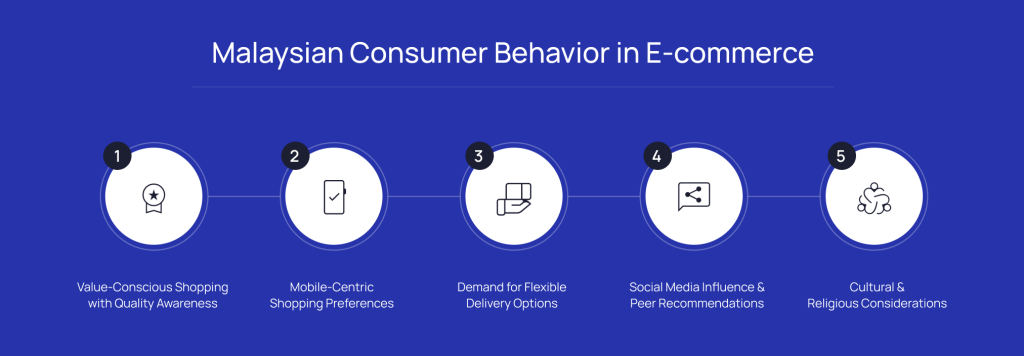
a. Value-Conscious Shopping with Quality Awareness
Malaysian consumers demonstrate a balanced approach to online shopping [8] and are increasingly value-conscious. This behavior creates opportunities for businesses that can effectively communicate their value propositions and demonstrate superior product quality with price tags that cater to the median wages of the average Malaysian.
b. Mobile-Centric Shopping Preferences
With smartphone usage exceeding 99.5% across Malaysia [9], consumers predominantly prefer mobile shopping experiences that offer convenience and flexibility. Successful e-commerce platforms prioritize mobile optimization, implementing streamlined navigation, one-click checkout processes, mobile payment integration, and app-specific features like push notifications and location-based promotions.
c. Demand for Flexible Delivery Options
Malaysian consumers, especially Gen Z and baby boomers, expect faster diverse delivery options [10] that accommodate their varied lifestyles and geographical locations. Same-day delivery in urban areas, scheduled delivery windows, cash-on-delivery options, and convenient pickup points are increasingly considered essential rather than premium services, particularly given Malaysia’s diverse urban and rural landscape. Most importantly, customers demand complete visibility into their order status and delivery progress, making comprehensive parcel tracking capabilities a critical differentiator for e-commerce success.
d. Social Media Influence and Peer Recommendations
Malaysian shoppers rely on social media recommendations and peer reviews before making purchasing decisions [11]. Businesses that actively engage with social media communities, encourage customer feedback, and maintain authentic online presences tend to perform significantly better in building brand trust and driving conversions.
e. Cultural and Religious Considerations
Malaysia’s multicultural society [12] requires businesses to understand diverse cultural preferences and religious considerations, particularly regarding halal products, festival-specific offerings, and culturally appropriate marketing messages. Companies that demonstrate cultural sensitivity and inclusive practices often achieve stronger customer loyalty and broader market appeal.
3. Top E-commerce Platforms in Malaysia
Malaysia’s e-commerce ecosystem features a dynamic mix of international platforms and homegrown solutions, each serving different consumer segments and business requirements. Understanding the competitive landscape of major marketplaces is crucial for businesses considering expansion into the Malaysia ecommerce market.
a. Shopee Malaysia
Shopee dominates the Malaysia e-commerce market as the leading mobile-first marketplace, capturing the largest market share through its user-friendly interface and innovative features. The platform’s success stems from its extensive seller tools, gamification elements, and strong logistics network that enables competitive shipping rates and reliable delivery services across Malaysia’s diverse geographical landscape.
- Region: Malaysia and Southeast Asia
- Headquarters: Singapore (Malaysia operations in Kuala Lumpur)
- Services: E-commerce Marketplace, Mobile Commerce, Social Commerce, Payment Solutions
- Specialization: Mobile-first marketplace with gamification features
b. Lazada Malaysia
Backed by Alibaba Group’s extensive resources, Lazada serves as a comprehensive e-commerce platform offering sophisticated logistics infrastructure and advanced seller tools. The platform’s integration with Alibaba’s ecosystem provides Malaysian businesses with access to international supply chains and cutting-edge e-commerce technologies that enhance operational efficiency and customer experience.
- Region: Southeast Asia
- Headquarters: Singapore (Malaysia operations in Kuala Lumpur)
- Services: E-commerce Marketplace, Logistics Solutions, Cross-border Trade, Advertising Platform
- Specialization: Professional-grade tools and international expansion capabilities
c. PG Mall
This Malaysian platform specializes in connecting local businesses with consumers while providing comprehensive support for small and medium enterprises. PG Mall’s appeal lies in its focus on empowering local entrepreneurs and offering competitive commission structures that make e-commerce accessible to businesses of all sizes.
- Region: Malaysia
- Headquarters: Kuala Lumpur, Malaysia
- Services: E-commerce Marketplace, SME Support, Local Business Solutions
- Specialization: Supporting local Malaysian businesses and entrepreneurs
d. Zalora Malaysia
Specializing in fashion and lifestyle products, Zalora has established itself as Malaysia’s leading fashion e-commerce platform. The platform’s success comes from its curated product selection, strong brand partnerships, and fashion-focused features like virtual try-ons and style recommendations that appeal to fashion-conscious Malaysian consumers.
- Region: Southeast Asia
- Headquarters: Singapore
- Services: Fashion E-commerce, Lifestyle Products, Virtual Try-on, Style Recommendations
- Specialization: Fashion and lifestyle marketplace
e. Carousell Malaysia
The popular regional marketplace has established a strong presence in Malaysia, specializing in consumer-to-consumer transactions while expanding to include business sellers. Carousell’s strength lies in its chat-based interface, mobile-first approach, and focus on local community commerce, making it particularly popular for secondhand goods, collectibles, and unique items among Malaysian consumers.
- Region: Southeast Asia
- Headquarters: Singapore
- Services: C2C Marketplace, Chat-based Commerce, Local Community Trading
- Specialization: Consumer-to-consumer transactions and secondhand goods
f. Mudah.my
Malaysia’s leading classifieds platform has evolved into a significant marketplace for both new and used goods, serving as a bridge between traditional classified advertising and modern e-commerce. Mudah.my’s appeal lies in its extensive reach across Malaysia, user-friendly interface, and strong presence in categories like automotive, property, and consumer goods, making it particularly valuable for businesses and individuals selling higher-value items.
- Region: Malaysia
- Headquarters: Kuala Lumpur, Malaysia
- Services: Online Classifieds, Marketplace, Automotive Sales, Property Listings
- Specialization: Classifieds and higher-value item transactions
4. Key Logistics & Delivery Providers in Malaysia
Malaysia’s expanding e-commerce sector relies heavily on efficient logistics networks that can serve the country’s diverse geographical landscape, from bustling urban centers like Kuala Lumpur to remote rural areas across Peninsular Malaysia, Sabah, and Sarawak. The logistics ecosystem combines international expertise with local knowledge to provide comprehensive solutions supporting the growing e-commerce market in Malaysia.
a. Pos Malaysia
As Malaysia’s national postal service, Pos Malaysia offers extensive domestic coverage and international shipping capabilities across the country’s challenging geography. The company has significantly invested in e-commerce logistics infrastructure, providing specialized warehousing, fulfillment, and delivery services designed specifically for online retailers. Their e-commerce solutions include same-day delivery options in major cities and comprehensive tracking systems.
- Region: Malaysia with international capabilities
- Headquarters: Kuala Lumpur, Malaysia
- Services: Postal Services, E-commerce Logistics, Warehousing, Fulfillment, Same-day Delivery
- No. of employees: 10,000+
b. J&T Express Malaysia
This rapidly growing logistics provider has established a dominant presence in Malaysia through its technology-driven approach and competitive pricing strategies. J&T Express’s strength lies in its extensive network coverage, cash-on-delivery services, and real-time tracking capabilities that enhance customer satisfaction across urban and rural deliveries.
- Region: Southeast Asia
- Headquarters: Jakarta, Indonesia (Malaysia operations based in Kuala Lumpur)
- Services: Last-Mile Delivery, Cash-on-Delivery, Real-time Tracking, Express Shipping
- No. of employees: 5,000+ (Malaysia operations)
c. Ninja Van Malaysia
The regional logistics unicorn has built a strong Malaysian operation focused on flexible pickup and delivery options, extensive parcel locker networks, and sophisticated tracking systems. Ninja Van’s technology-first approach enables efficient last-mile delivery solutions that cater to the diverse needs of Malaysian e-commerce businesses.
- Region: Southeast Asia
- Headquarters: Singapore (Malaysia operations based in Petaling Jaya)
- Services: Last-Mile Delivery, Parcel Lockers, Technology Solutions, Express Delivery
- No. of employees: 2,000+ (regional)
d. GDex (GD Express Carrier)
As a leading Malaysian logistics provider, GDex offers comprehensive domestic and international shipping services with strong coverage across East and West Malaysia. The company’s focus on reliability and customer service has made it a preferred partner for businesses requiring consistent delivery performance across Malaysia’s challenging geographical terrain.
- Region: Malaysia with international services
- Headquarters: Shah Alam, Malaysia
- Services: Express Delivery, Freight Services, International Shipping, Warehousing
- No. of employees: 3,000+
e. DHL e-commerce Malaysia
Leveraging DHL’s global logistics expertise, DHL e-commerce provides premium delivery services with exceptional international reach capabilities. Their solutions particularly appeal to cross-border e-commerce businesses and brands requiring specialized handling, expedited delivery services, or comprehensive international shipping solutions.
- Region: Worldwide
- Headquarters: Bonn, Germany (Malaysia operations based in Kuala Lumpur)
- Services: International Express, E-commerce Solutions, Cross-border Shipping, Premium Delivery
- No. of employees: 380,000+ (global)
f. Grab Express Malaysia
The ride-hailing giant has successfully expanded into logistics with on-demand delivery services across major Malaysian cities. Grab Express excels in same-day and instant delivery options, making it ideal for businesses requiring urgent shipments or serving time-sensitive customer demands in urban markets.
- Region: Southeast Asia
- Headquarters: Singapore (Malaysia operations based in Kuala Lumpur)
- Services: On-demand Delivery, Same-day Delivery, Instant Delivery, Urban Logistics
- No. of employees: 1,000+ (Malaysia operations)
5. Cross-Border E-commerce in Malaysia
Malaysia’s strategic position in Southeast Asia creates exceptional opportunities for cross-border e-commerce, serving both as an attractive market for international brands and as a launching pad for Malaysian businesses seeking regional expansion beyond domestic borders.
a. Gateway to ASEAN Markets
Malaysia serves as an ideal entry point for businesses targeting the broader ASEAN market, leveraging established trade relationships, favorable logistics infrastructure, and business-friendly policies. The country’s membership in various free trade agreements [13] facilitates efficient importation and distribution strategies across Southeast Asian markets.
b. Access to Global Supply Chains
International brands can leverage Malaysia’s extensive trade networks and strategic location [14] to access cost-effective supply chains while maintaining quality standards. The country’s ports and airports provide efficient connectivity to major global markets, supporting both importation and exportation activities for cross-border e-commerce operations.
c. Regulatory and Business Environment
Malaysia’s transparent regulatory framework and improving intellectual property protections [15] provide security for international businesses entering the market. The government’s pro-business policies and streamlined processes reduce administrative burdens compared to other regional markets, making market entry more accessible for foreign companies.
d. Cultural and Linguistic Advantages
Malaysia’s multicultural society and widespread English proficiency (ranked 26th globally [16]) serve as cultural bridges between international brands and diverse Asian consumer segments. This advantage helps global companies understand and adapt to regional preferences while navigating cultural sensitivities effectively.
e. Technology Infrastructure Supporting Cross-Border Operations
Malaysia’s advancing telecommunications and digital transformation initiatives [17] support sophisticated cross-border e-commerce operations, including real-time inventory management across multiple countries and seamless integration with international platforms and payment systems.
6. Key Challenges in the Malaysian E-commerce Landscape
Despite its tremendous potential, the Malaysian e-commerce market presents unique challenges that businesses must navigate strategically to achieve sustainable success. Understanding these obstacles is crucial for developing realistic expectations and effective operational strategies.
a. Infrastructure Disparities
While urban areas enjoy excellent digital infrastructure, rural regions still face connectivity challenges [18] that can limit market reach and delivery efficiency. Businesses must develop adaptive strategies that account for varying infrastructure quality across different Malaysian states and regions.
b. Cultural and Language Diversity
Malaysia’s multicultural population requires businesses to navigate complex cultural preferences, language requirements, and religious considerations. Successful companies must develop inclusive marketing strategies and product offerings that resonate with Malay, Chinese, Indian, and indigenous communities while respecting cultural sensitivities.
c. Logistics Complexity Across East and West Malaysia
Managing efficient delivery across Peninsular Malaysia, Sabah, and Sarawak presents significant logistical challenges [19] due to geographical separation and varying infrastructure development. Businesses must partner with experienced logistics providers who understand the complexities of serving Malaysia’s diverse geographical landscape while implementing advanced parcel tracking systems that provide visibility and control over multi-carrier operations, enabling proactive exception management and superior customer communication.

d. Regulatory Compliance and Tax Considerations
Malaysia’s evolving e-commerce regulations, including SST requirements [20], digital service tax [21], and consumer protection laws [22], require businesses to maintain compliance across multiple regulatory frameworks. Staying current with changing regulations while managing compliance costs can be particularly challenging for smaller businesses.
e. Payment Method Preferences and Financial Inclusion
QR-based payments and digital wallets are becoming the norm for Malaysians, with the country ranking second for QR code payments [23], behind China. Therefore, businesses must support diverse digital payment methods while managing the associated costs and risks of different payment preferences across various customer segments.
7. How to Succeed in the Malaysian E-commerce Market
Success in Malaysia’s competitive e-commerce landscape requires strategic planning, deep local market understanding, and operational excellence tailored to the unique characteristics of the Malaysian e-commerce market. These proven strategies can help businesses establish and grow their presence effectively.
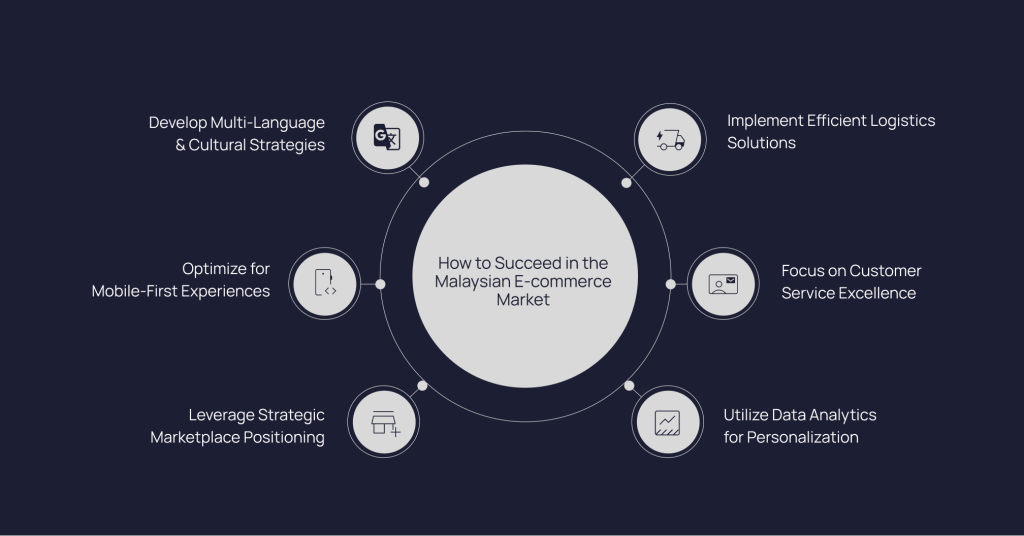
a. Develop Multi-Language and Cultural Strategies
Implement comprehensive localization strategies that address Malaysia’s linguistic diversity by offering content in Bahasa Malaysia, English, Mandarin, and Tamil where appropriate. Ensure marketing messages, product descriptions, and customer service align with cultural preferences and religious considerations to build authentic connections with diverse Malaysian communities.
b. Optimize for Mobile-First Experiences
Given Malaysian consumers’ preference for mobile shopping [24], prioritize creating seamless mobile experiences with fast loading times, intuitive navigation, mobile-optimized checkout processes, and integration with popular local payment methods like Touch ‘n Go eWallet, GrabPay, and online banking solutions.
c. Leverage Strategic Marketplace Positioning
Develop a sophisticated multi-platform strategy that leverages the unique strengths of different marketplaces while maintaining consistent brand messaging. Tailor your approach to each platform’s specific features and customer demographics while optimizing for the algorithms and promotional opportunities each marketplace provides.
d. Implement Efficient Logistics Solutions
Partner with reliable logistics providers who understand Malaysia’s geographical challenges and can deliver consistent service across Peninsular Malaysia, Sabah, and Sarawak. Equally important is implementing robust parcel tracking systems that provide customers with real-time visibility into their orders while enabling businesses to proactively manage delivery exceptions and maintain superior customer communication throughout the fulfillment process.
e. Focus on Customer Service Excellence
Invest in comprehensive customer support systems including multilingual live chat, efficient returns processing, and culturally appropriate communication styles. Consider providing customer service in multiple languages and time zones to serve Malaysia’s diverse population effectively while building long-term customer relationships.
f. Utilize Data Analytics for Personalization
Implement advanced analytics to understand Malaysian consumer behavior patterns and preferences across different demographic segments. Develop personalization strategies that deliver relevant product recommendations, customized marketing messages, and tailored shopping experiences that resonate with individual customer needs and cultural preferences.
For businesses looking to establish successful e-commerce operations, launching successful e-commerce logistics operations in Malaysia requires careful planning and local expertise to navigate the market’s unique challenges and opportunities effectively.
8. The Future of E-commerce in Malaysia
Malaysia’s e-commerce sector is positioned for exceptional growth and innovation, driven by rapid technological advancement, evolving consumer behaviors, and increasingly supportive government digital transformation policies. Understanding emerging trends helps businesses prepare for future opportunities while positioning themselves strategically for long-term success in the Malaysian e-commerce market.
a. Artificial Intelligence and Automation Integration
AI and machine learning technologies will become increasingly part and parcel of the Malaysian shopping experience [25]. Businesses that embrace these technologies early will gain significant competitive advantages in efficiency and customer satisfaction.
b. Expansion of Rural E-commerce Penetration
As internet infrastructure continues improving in rural areas, the e-commerce market in Malaysia will expand beyond urban centers to serve previously underserved populations. This geographic expansion creates substantial opportunities for businesses willing to adapt their strategies for rural consumer preferences and logistics challenges.
c. Growth in Subscription and Membership Models
The subscription economy will continue expanding beyond traditional categories, with Malaysian consumers increasingly embracing recurring subscription-based services [26]. This trend creates opportunities for businesses to build predictable revenue streams while developing deeper customer relationships through consistent value delivery.
d. Enhanced Cross-Border Trade Facilitation
Malaysia’s strategic position and chairmanship of ASEAN [27] will become increasingly valuable as cross-border e-commerce expands throughout Southeast Asia. Malaysian businesses will have growing opportunities to serve regional markets while international brands will increasingly use Malaysia as their strategic entry point for ASEAN market penetration.
9. Positioning for Growth in Malaysia’s Digital Market
The Malaysian e-commerce market rewards businesses that understand local nuances while leveraging global best practices to deliver exceptional customer experiences.
For international brands, Malaysia offers an excellent testing ground for Southeast Asian expansion strategies, providing valuable market insights while serving as a strategic base for regional operations. Local businesses can benefit from the increasingly sophisticated infrastructure and growing consumer confidence while preparing for cross-border growth opportunities across ASEAN markets.
The foundation to success lies in recognizing that Malaysia’s e-commerce market rewards excellence, cultural sensitivity, and customer-focused innovation. Businesses that understand the importance of leveraging advanced technology platforms to manage complex multi-channel operations efficiently while respecting local preferences and cultural diversity will find exceptional opportunities for sustainable growth.
Anchanto’s comprehensive solutions provide the advanced technology infrastructure and expertise necessary to succeed in Malaysia’s sophisticated and rapidly evolving e-commerce marketplace.
For businesses ready to capitalize on Malaysia’s e-commerce potential, the market offers exceptional opportunities for growth and expansion in one of Southeast Asia’s most dynamic and promising digital economies.
Ready to build the foundation for e-commerce success in Malaysia?
Discover how advanced order management and parcel tracking systems can support your success in this rapidly growing market.
Get In TouchFAQs
1. How big is the e-commerce market in Malaysia?
The Malaysian e-commerce market reached 733 million USD in revenue [28], driven by increasing internet penetration, mobile adoption, and digital payment acceptance. The market encompasses diverse product categories and serves a growing base of digitally-savvy consumers across urban and rural areas, making it one of Southeast Asia’s most promising e-commerce destinations.
2. Which product categories sell the most online in Malaysia?
Electronics, fashion and apparel, beauty and personal care, home and living products, and food and beverages represent the top-performing categories in the e-commerce market in Malaysia. However, emerging categories like health and wellness, baby and kids products, and sports equipment are also showing strong growth potential as consumer preferences continue evolving.
3. Is Malaysia a good market for cross-border e-commerce brands?
Malaysia offers excellent opportunities for cross-border e-commerce brands due to its strategic location, improving infrastructure, diverse consumer base, and supportive regulatory environment. The country serves as an ideal gateway to ASEAN markets while providing access to sophisticated logistics networks and growing consumer purchasing power that support sustainable international business expansion.
4. What are the top e-commerce platforms in Malaysia?
The leading platforms in the Malaysian e-commerce market include Shopee Malaysia, Lazada Malaysia, PG Mall, Carousell, Mudah.my, and Zalora Malaysia. Each platform offers unique advantages and serves different consumer segments, with successful businesses often adopting multi-platform strategies to maximize market reach and customer acquisition across diverse demographic groups.
References:
[2] Ekonomi.gov.my – Malaysia Digital Economy Blueprint
[3] Data.worldbank.org – Individuals using the Internet (% of population) – Malaysia
[4] Datareportal.com – Digital 2023: Malaysia
[5]
[6] Datareportal.com – Digital 2024: Malaysia
[7] Kpmg.com/my – Seamless commerce a necessity for Malaysia’s retailers
[8] Cforce-int.com – Malaysia Consumer Trend Report
[9] Dosm.gov.my – ICT USE AND ACCESS BY INDIVIDUALS AND HOUSEHOLDS SURVEY REPORT, 2024
[10] Assets.kpmg.com – Navigating the future of seamless commerce in Asia Pacific
[11] Media-outreach.com – Shopee Study Reveals: Malaysian Shoppers Now Balance Price with Quality
[12] Malaysia.gov.my – Demography of Population
[13] Aseanbriefing.com – How Foreign Investors Can Leverage Malaysia’s Free Trade Agreements
[14] Aseanbriefing.com – How Foreign Investors Can Leverage Malaysia’s Free Trade Agreements
[15] Msadvisory.com – Doing Business in Malaysia
[16] Ef.com – The 2025 edition of the EF EPI will be released on 19 November 2025
[17] Trade.gov – Malaysia Country Commercial Guide
[18]
[19] Mida.gov.my – Unlocking Malaysia’s e-commerce growth: The role of logistics
[20] Mysst.customs.gov.my- Understanding SST
[21] Mystods.customs.gov.my – About SToDS
[22] Yeongassociates.com – Consumer Protection Laws and Business Practices in Malaysia
[23] Fintechnews.my – Malaysia Ranks Second in QR Code Payments, Just Behind China
[24] Theedgemalaysia.com – Malaysians are more and more mobile
[25] Adyen.com – Malaysia Retail Report 2025
[26] Themalaysianreserve.com – Subscription economy gains momentum amid SST shift