
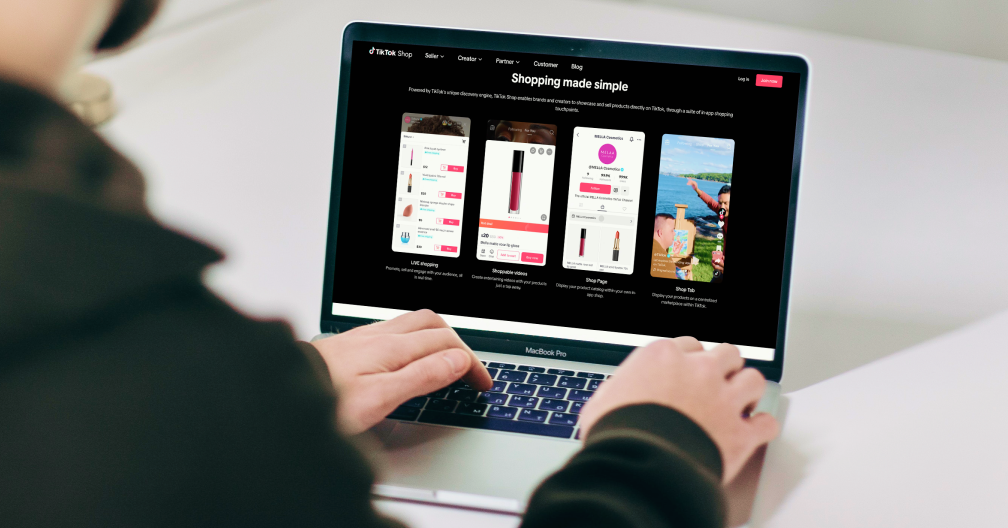
Key Takeaways:
- TikTok Shop is projected to generate $66.2 billion in GMV by the end of 2025, representing 100% year-over-year growth.
- Successful sellers leverage multiple formats including shoppable videos, live shopping, and the Shop Tab marketplace.
- Integrated order management systems are essential for handling TikTok Shop’s strict fulfillment timelines and multi-channel inventory sync.
- The platform’s algorithm rewards content quality, operational excellence, and fast shipping speeds with increased visibility.
- Enterprise brands need centralized systems to scale TikTok Shop operations without proportional increases in manual workload.
TikTok Shop has evolved from a social media experiment into a dominant force reshaping global commerce. By the end of 2025, TikTok Shop is projected to generate $66.2 billion in GMV [1], representing a 100% year-over-year increase from the $33.2 billion recorded in 2024.
The platform’s integration of entertainment and transactional functionality creates unique advantages for brands operating at scale. Unlike traditional marketplaces where product discovery relies on search, TikTok Shop leverages algorithmic content distribution to surface products to high-intent buyers. This approach aligns particularly well with direct-to-consumer (D2C) strategies, where brands seek to build direct relationships with customers.
In this blog, we’ll walk you through everything you need to know about how to sell on TikTok Shop, from account setup and product management to optimization strategies and integration tools that help enterprise brands scale efficiently.
What Is TikTok Shop?
TikTok Shop is TikTok’s native commerce platform that enables brands to sell products directly within the TikTok ecosystem. Unlike external marketplace integrations that redirect users away from their social experience, TikTok Shop embeds the entire purchase journey from discovery to checkout within the app itself [2].
The platform functions as a complete sales channel with three primary components. First, digital storefronts accessible through brand profiles allow you to showcase product catalogs with pricing, descriptions, and customer reviews. Second, shoppable videos feature clickable product links that let viewers transition from entertainment to purchase with minimal friction. Third, live shopping broadcasts combine real-time product demonstrations with instant checkout capabilities.
From an operational perspective, TikTok Shop operates as a managed marketplace. The platform handles payment processing, facilitates buyer-seller communication, and provides dispute resolution frameworks. Sellers maintain control over inventory, fulfillment, and customer service touchpoints while TikTok manages the transactional infrastructure.
Is it Worth Selling on TikTok Shop in 2026?
The numbers tell a compelling story [3]. It is the second most popular social commerce platform in the US, with $32 million in transactions made per day. Nearly half of TikTok social shoppers make a purchase on the platform at least once a month, a frequency that exceeds Facebook, Instagram, and Pinterest.
Key advantages for retail brands
The algorithmic distribution model reduces dependence on paid advertising for initial visibility. Quality content can achieve substantial organic reach regardless of follower count. Video commerce consistently outperforms static product pages for conversion across digital channels.
What you need to be ready for
However, TikTok Shop demands operational readiness [4]. Orders typically require shipping within 24 to 48 hours to maintain competitive seller ratings. The platform mandates 24-hour response windows to customer inquiries. For brands managing multiple channels, this necessitates real-time inventory visibility and efficient warehouse operations.
The competitive landscape reveals both opportunity and challenge. As of December 2025 [5], the platform has 15 million sellers globally, with 216,000 generating active sales. While approximately half of listed stores recorded zero sales, over 1,000 stores achieved more than $1 million in annual GMV, with 77 stores surpassing $10 million.
Who Can Sell on TikTok Shop?
TikTok Shop is available to both individual sellers and registered businesses, though requirements differ based on your entity type and location.
Basic eligibility requirements
To sell on TikTok Shop, you need to be at least 18 years old with valid government-issued identification, have a bank account for payment processing, and operate in a supported country. Individual sellers provide personal documentation including ID and tax information, while businesses need additional corporate documents like business licenses, tax identification numbers, and authorized representative details.
Geographic availability
TikTok Shop currently operates in 11 countries: Ireland, Indonesia, Malaysia, Mexico, the Philippines, Singapore, Spain, Thailand, the United States, United Kingdom, Vietnam, France, Germany, and Italy [6]. The platform continues expanding to new markets, though specific timelines for additional regions haven’t been announced.
No follower requirements
Unlike some creator monetization programs, TikTok Shop imposes no minimum follower count for selling. You can establish a storefront and list products regardless of your existing TikTok audience size, making it accessible for brands just starting their social commerce journey.
How to Create a Retailer Account on TikTok Shop
TikTok Shop Seller Requirements
Before you begin, ensure you have valid government-issued identification, tax documentation for your business or individual status, bank account details for payment processing, and a valid phone number and email address. Businesses will also need their legal business name and tax identification number.
How to Set Up a TikTok Shop Account
Setting up a TikTok Shop account involves identity verification and business documentation to ensure platform security and compliance. The process typically takes several business days from application to approval.
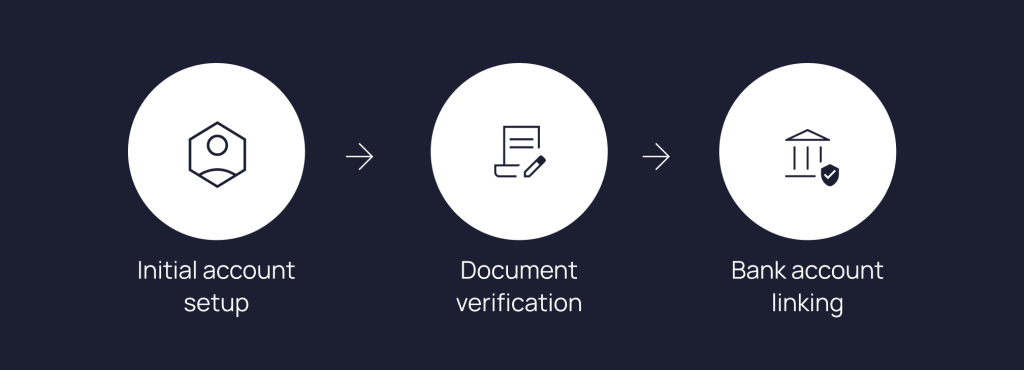
Phase 1: Initial account setup
The setup happens through TikTok Shop Seller Center, where you’ll select your country, choose between individual or business registration, and configure your warehouse and return addresses.
Phase 2: Document verification
Document verification requirements vary based on whether you’re registering as an individual or corporation. Individual sellers submit personal identification, while businesses provide both representative identification and official business registration documents
Phase 3: Bank account linking
Once your documents are approved, you’ll link your bank account to start receiving payments.
The entire setup process is managed through TikTok Shop Seller Center platform, which provides tools for store operations management, customer service, performance analysis, and ongoing seller education.
Detailed instructions can be found here [7].
How to Add & Manage Products on TikTok Shop
Product catalogue management determines how effectively brands present inventory to TikTok’s engaged user base. Each product listing requires comprehensive data including title, description, pricing, inventory quantity, and category classification.
Product titles should balance keyword optimization with readability. Visual assets significantly impact conversion rates, so products require multiple high-quality images displaying the item from various angles.
The enterprise challenge
For retail brands managing extensive catalogs across multiple sales channels, manual product entry becomes operationally untenable. Maintaining separate product information for TikTok Shop, Amazon, your website, and other marketplaces creates massive overhead and introduces errors.
The integration solution
This is where integrated Order Management systems provide critical value. Anchanto’s TikTok integration enables brands to centralize product information management, synchronizing inventory, pricing, and descriptions across TikTok Shop and other marketplaces from a single interface.
Rather than maintaining separate product catalogs for each platform, retailers establish master product records that automatically populate TikTok Shop listings with accurate, up-to-date information. When a product sells on TikTok Shop, integrated systems immediately adjust available inventory across all platforms, preventing overselling. Price management also benefits from centralized control. Brands running promotions can implement changes once, with updates flowing automatically to TikTok Shop and other connected channels.
These operational efficiencies can translate directly to bottom-line impact. Integrated systems enable brands to scale TikTok Shop operations without proportionally increasing operational overhead.
Selling Formats on TikTok Shop
Once you’ve completed your account setup and added products, understanding how to start selling on TikTok Shop effectively requires leveraging the platform’s multiple selling formats. TikTok Shop provides several options, each optimized for different content types and consumer behaviors.
TikTok Shop Affiliate Program
The TikTok Shop Affiliate Program connects brands with content creators who promote products in exchange for commission-based compensation.
Commission structures typically range from 10% to 20% of sale value [8]. TikTok influencers with up to 50,000 followers achieve 30.1% engagement rates for affiliate links, significantly outperforming comparable Instagram influencers. This data suggests that micro-influencers can deliver substantial value for brands, often at lower costs than macro-influencer partnerships.
Major global brands have embraced affiliate campaigns across creator tiers, recognizing that audience authenticity often matters more than follower count. The performance-based model aligns incentives between brands and creators, ensuring marketing spend correlates directly with sales outcomes.
TikTok Shop LIVE Selling
Live shopping represents TikTok Shop’s most interactive selling format, combining real-time video broadcasting with immediate purchase capabilities.
The format’s effectiveness stems from its ability to address purchase objections in real time, providing product demonstrations that static listings cannot replicate. Successful live shopping requires structured preparation: script product presentations, ensure proper lighting and stable camera positioning, and maintain professional production quality. Regular scheduling builds audience expectation and recurring traffic patterns.
In-feed Shoppable Videos
In-feed shoppable videos integrate product links directly into TikTok’s main content stream. Video content generated approximately 50% of TikTok Shop GMV in H1 2025 [9], maintaining its position as the dominant sales channel.
Content strategy for shoppable videos differs fundamentally from traditional product advertising. Effective videos prioritize entertainment or education over direct selling, with product integration feeling organic to content narrative. Common formats include:
- Product demonstrations
- Before-and-after comparisons
- Unboxing experiences
- Lifestyle integration showing products in everyday contexts
A single high-performing video can generate substantial sales volume as the platform distributes content to progressively larger audiences based on engagement signals.
Shop Tab browsing experience
The Shop Tab provides a marketplace-style browsing experience within TikTok, reflecting the broader evolution of social commerce. Product optimization for Shop Tab follows traditional e-commerce principles: incorporate relevant keywords in titles, assign accurate categories, and create detailed descriptions. High-quality primary images that clearly display products against clean backgrounds improve click-through rates from ‘browse’ pages.
How Order Management Works on TikTok Shop
How TikTok handles orders
TikTok Shop’s order management system processes transactions through a structured workflow designed to protect both buyers and sellers. When a customer completes a purchase, the order enters a pending state where TikTok holds payment while awaiting fulfillment confirmation.
The platform enforces strict fulfillment timelines. TikTok Shop Sellers must fulfill orders within 72 hours to maintain Good shipping scores. Delayed shipments negatively impact seller ratings, reducing future algorithmic visibility.
For enterprise retailers managing significant order volumes, integrated order management systems, such as Anchanto’s, automatically route TikTok Shop orders to warehouse management systems, generate pick lists, and update tracking information without manual intervention.
Shipping methods and delivery workflows
TikTok Shop supports self-fulfillment and Fulfilled by TikTok (FBT) [10]. Self-fulfillment gives brands complete control over logistics, providing maximum flexibility and often lower per-unit costs for brands with established logistics infrastructure.
FBT operates similarly to industry-standard FBA programs, with TikTok managing storage, picking, packing, and shipping. The service includes 30 days of free storage.
Shipping speed expectations matter significantly. Slow fulfillment times damage search rankings, with the algorithm penalizing sellers who fail to ship orders within 24 hours.
Returns, refunds and cancellations
Buyers can initiate returns within 7 to 30 days depending on product category and local regulations. Return shipping costs generally fall to TikTok Shop sellers unless products arrive damaged or defective.
The platform charges a Refund Administration Fee equal to 20% of the original referral fee when refunds are processed. High cancellation and refund rates damage seller metrics significantly, lowering search visibility.
- TikTok Shop fees, commissions & penalties
- TikTok Shop’s fee structure combines multiple elements:
- 6% referral commission on most products (5% for certain jewelry)
- 1.5% to 2.9% transaction processing fees plus fixed fee
- Small order fee (typically $0.50) on low-value transactions
- Affiliate commissions (10-20% when using creators)
For financial planning purposes, brands should model total transaction costs. A $50 product might generate net proceeds of only $35 to $40 after accounting for all platform costs.
TikTok Shop Algorithm and Sales Optimization
How the discovery algorithm works
TikTok Shop’s discovery system operates through a sophisticated recommendation engine [11] that analyzes user behavior, content characteristics, and transaction patterns. When a video is posted, TikTok shows it to a limited group, then pushes it out to larger audiences if content performs well.
The algorithm tracks user interactions including watch time, likes, shares, saves, and comments. Watch time represents the most influential metric: videos that viewers watch completely or multiple times signal exceptional quality, triggering broader distribution.
For product discovery specifically, the algorithm considers commercial intent signals. Videos demonstrating higher click-through rates to product pages receive preferential distribution to users exhibiting shopping behavior.
How ranking works inside TikTok Shop
TikTok Shop’s internal ranking system determines product visibility within browse interfaces and search results. Key factors include:
- Product relevance: The algorithm analyzes product titles, descriptions, attributes, and tags to match them to user queries.
- Sales velocity: Products generating consistent transaction volume receive algorithmic preference over slower-moving inventory.
- Reviews: Review volume and velocity both matter significantly. Products with substantial review counts rank higher.
- Operational performance: Slow fulfillment times and high cancellation rates trigger algorithmic penalties.
Content best practices
Content quality determines both immediate engagement and long-term algorithmic favor. The first 3 seconds of videos determine 71% of viewer retention decisions [12]. Effective hooks employ curiosity gaps, emotional triggers, or striking visual elements.
Video completion rates heavily influence algorithmic distribution. Videos exceeding 60 seconds now receive 43.2% more reach [13] when completion rates remain high. Keyword recognition has become increasingly important, with spoken keywords, caption text, and on-screen text all indexed for search.
Visual quality standards matter, but authenticity consistently outperforms overly polished marketing content. TikTok audiences respond more positively to genuine product demonstrations and honest testimonials than to traditional advertising formats.
TikTok Shop Integrations and Tools
OMS / WMS / OXM / ERP integrations
For retail brands operating across multiple sales channels, integrated technology infrastructure becomes essential to maintain operational efficiency at scale.
- Order Management Systems provide centralized control over multi-channel inventory and order orchestration. When properly integrated with TikTok Shop, these systems automatically ingest orders, route them to optimal fulfillment locations, and update tracking information without manual intervention.
- Real-time inventory synchronization prevents overselling across channels. When a product sells on TikTok Shop, inventory decrements automatically flow to other marketplaces and direct-to-consumer channels. This synchronization becomes particularly important during high-volume promotional periods.
- Warehouse Management Systems extend efficiency deeper into fulfillment operations. Orders flow directly into warehouse pick processes with optimized pick paths. Systems intelligently allocate inventory across warehouse locations based on customer proximity and shipping costs.
- Order Experience Management platforms maintain master product records that populate TikTok Shop listings automatically. When product information requires updates, changes flow to all connected channels, ensuring consistency.
- ERP integration connects TikTok Shop to broader business processes including financial reporting and supplier coordination. Orders and revenue flow automatically into accounting systems.
Analytics and creator tools
Third-party analytics platforms supplement TikTok’s native capabilities by tracking sales velocity, identifying trending products, and monitoring competitive positioning. Advanced solutions measure which videos drive actual sales and calculate return on content investment.
Creator discovery platforms help brands identify potential affiliate partners by aggregating creator profiles, audience demographics, and engagement metrics. These tools enable brands to search creators by niche, analyze audience authenticity, and review past performance.
Ads + Shop integration
TikTok’s advertising platform integrates directly with TikTok Shop through Video Shopping Ads, Live Shopping Ads, Product Showcase Ads, and Dynamic Product Ads. Integrated analytics track how paid traffic performs compared to organic reach, enabling budget allocation optimization.
Best Practices to Increase Sales on TikTok Shop
Success on TikTok Shop requires balancing content creation, operational excellence, and strategic partnerships:
- Invest in content quality: High-production videos with clear messaging consistently outperform low-quality content. Allocate resources to professional videography, lighting, and editing capabilities.
- Maintain posting consistency: Plan content themes, product focuses, and promotional campaigns in advance to avoid gaps in your content calendar.
- Leverage user-generated content: Encourage customers to create content featuring your products for authentic social proof.
- Optimize product listings: Comprehensive information improves both search visibility and conversion rates.
- Implement review solicitation: Systematically request reviews from satisfied customers as they directly impact search rankings.
- Test multiple formats: Experiment with shoppable videos, live shopping, and Shop Tab optimization.
- Maintain operational excellence: Fast shipping and responsive customer service directly impact algorithmic visibility.
- Scale creator partnerships: Start with micro-influencers to test product-market fit before expanding.
- Integrate technology infrastructure: Manual processes don’t scale. Invest in integrated systems early.
Common Mistakes to Avoid as a TikTok Shop Seller
Understanding what not to do is as important as knowing best practices:
- Treating TikTok like traditional e-commerce: The platform requires entertainment-first content, not product-first marketing. Brands that repurpose traditional e-commerce content typically underperform.
- Neglecting fulfillment speed: Slow shipping destroys search rankings and customer satisfaction.
- Ignoring creator partnerships: Building audiences organically without leveraging creators creates significant growth challenges.
- Poor customer service responsiveness: TikTok’s 24-hour response requirement triggers algorithmic penalties when ignored.
- Focusing only on follower count: Engagement metrics matter more than vanity metrics.
- Inconsistent posting: Sporadic content publication confuses the algorithm and fails to build audience habits.
Case Studies and Success Stories
Real-world examples demonstrate how brands across different categories leverage TikTok Shop to drive measurable business results.
L’Oréal Paris: Enterprise-Scale Success
Cosmetics giant L’Oréal Paris was selected for TikTok Shop’s first Super Brand Day [14], blending digital in-app and real-life experiences. The campaign featured exclusive product launches, a 12-hour LIVE shopping event streamed onto London’s iconic Piccadilly light screen, and thousands of creators producing shoppable videos.
The results were substantial: L’Oréal achieved a 6.24x gross merchandise value uplift over the previous period. The campaign demonstrated how enterprise brands can coordinate large-scale activations combining live shopping, creator partnerships, and physical brand experiences.
Lidl: Flash Sales Drive Urgency
In early 2025, the U.K. brand of Germany-based supermarket chain Lidl used TikTok Shop to drive two flash sensations that sold out rapidly [15]. In March, Lidl promoted a limited-edition Dubai Style chocolate bar through LIVE shopping and shoppable videos, posted from both the retailer’s TikTok handle and a popular food creator account.
Lidl posted the video at 9 a.m. and had sold out its entire 6,000-unit run, available exclusively on TikTok Shop, before 10:30 a.m. The retailer achieved similar results when promoting limited-edition bundles of high-protein bars, powders, and drinks. That inventory sold out 3,000 units in just 18 minutes.
Ollie: Early Adoption in Emerging Markets
Brazilian skincare brand Ollie adopted an early-adoption strategy [16], joining TikTok Shop immediately upon its Mexican market launch. The brand combined affiliate marketing campaigns with content collaborations featuring creators like Kunno, Baldo Garzam, Priscilla Styles, and Fernanda Elizondo. The creative strategy blended educational content about daily sunscreen use with entertaining, trend-driven videos highlighting product texture and real results.
Although TikTok Shop wasn’t Ollie’s primary sales channel in Mexico, it became a crucial visibility driver and brand discovery platform. The campaign generated viral videos that boosted recognition among key Mexican retailers, increased follower growth, and drove indirect sales uplift across Ollie’s own e-commerce channel. The brand’s early presence helped attract top creators and gain organic visibility during a period of high platform enthusiasm and low competition.
Key takeaways:
These case studies reveal common success patterns. Successful brands integrate multiple selling formats rather than relying on a single approach. They coordinate creator partnerships with owned content for broader reach. Time-limited offers and exclusive products create urgency that drives rapid conversion. Full-funnel strategies combining awareness and conversion tactics deliver stronger overall performance.
Ready to scale your TikTok Shop operations efficiently?
Explore how Anchanto’s Order Management platform streamlines multi-channel selling with automated inventory sync, intelligent order routing, and seamless TikTok Shop integration.
Get In TouchFAQs
1. What is the platform fee to sell on TikTok Shop?
TikTok Shop charges a 6% referral commission on most products (5% for certain jewelry items), plus transaction processing fees of 1.5% to 2.9% plus a fixed fee. Small order fees may apply to low-value transactions. Additional costs include optional affiliate commissions (typically 10-20%) and advertising spend if using paid promotion.
2. What products sell best on TikTok Shop?
Beauty and personal care, fashion accessories, home goods, and consumer electronics consistently perform well. Products that demonstrate visible results, solve specific problems, or offer unique features tend to generate strongest engagement.
3. How long does TikTok Shop approval take?
Application processing typically takes several business days after complete documentation submission. However, timeframes vary based on application volume and documentation completeness. Brands should ensure all required documents meet quality standards to avoid processing delays.
4. What countries support TikTok Shop for e-commerce sellers?
As of December 2025, TikTok Shop operates in Ireland, Indonesia, Malaysia, Mexico, the Philippines, Singapore, Spain, Thailand, the United States, United Kingdom, and Vietnam. Geographic expansion continues, though specific timelines for additional markets have not been announced.
5. How are payments processed on TikTok Shop and when do sellers get paid?
TikTok holds payment during order fulfillment and a brief verification period after delivery confirmation. Once the order completes successfully, funds transfer to the linked bank account according to TikTok’s settlement schedule. Payment timing varies by region but typically occurs within 7-14 days of order completion.
6. Why am I not getting views or sales on TikTok Shop?
Low visibility typically stems from inadequate content quality, inconsistent posting schedules, poor product-market fit, or insufficient engagement signals. The algorithm rewards content that generates strong watch time and engagement. Brands should analyze top-performing competitors, optimize content production quality, and consider leveraging creator partnerships to build initial momentum.
7. Does TikTok Shop integrate with OMS, ERP, or fulfillment systems?
Yes, TikTok Shop supports integration with Order Management Systems, Enterprise Resource Planning platforms, and fulfillment systems through third-party integration platforms. These integrations enable automated order processing, real-time inventory synchronization, centralized product catalog management, and financial reporting consolidation. Platforms like Anchanto provide pre-built connectors that streamline TikTok Shop integration with existing enterprise systems, eliminating manual data entry and reducing operational overhead as brands scale.
References:
[1] Resourcera.com – TikTok Shop Statistics (2025) Global GMV, Sales, And More
[2] Ads.tiktok.com – About TikTok Shop and Showcase
[3] Capitaloneshopping.com – TikTok Shopping Statistics
[4] Seller-us.tiktok.com – Customer Service Policy
[5] Resourcera.com – TikTok Shop Statistics (2025) Global GMV, Sales, And More
[6] News.worldef.com – TikTok Shop is Expanding in Europe!
[7] Ads.tiktok.com – Requirements to register as a seller on TikTok Shop
[8] Seller-ie.tiktok.com – TikTok Shop Affiliate Programme
[9] Cgaa.org – Unlocking the Full Potential of TikTok Shop GMV
[10] Seller-us.tiktok.com – Fulfilled by TikTok (FBT)
[11] Sproutsocial.com – How the TikTok algorithm works in 2025
[12] Animoto.com – Why The First 3 Seconds of Video Matter More Than the Next 30
[13] Buffer.com – Longer TikToks Get More Views — Data Shows Best TikTok Video Length
[14] Business.tiktokshop.com – L’Oréal Paris Super Brand Day: A record-breaking beauty event
[16] Ads.tiktok.com