
5 Ways Brands Can Leverage Digital Shelf Analytics for an Effective E-commerce Strategy
Blogs
According to Statista [1], global e-commerce sales are projected to surpass eight trillion dollars by 2027, putting pressure on brands to stand out in an oversaturated e-commerce industry. For brands that sell on various prominent marketplaces, such as Amazon, Shopee, or Lazada, for instance, building a unique online presence is key to driving sales in a competitive category. Achieving this goal requires a strategic focus on your digital shelf.
A digital shelf is a concept that represents your brand’s complete online presence. This includes brand reviews, pricing, images, and product information. With an estimated 20% [2] of sales driven by reviews, roughly one-third of online shoppers share that they wouldn’t purchase a product without good reviews. This underscores the importance of maintaining a healthy digital shelf.
To stay competitive, your brand should evaluate its digital shelf health. But at the same time, you need to keep an eye on what your competitors are doing. This is where digital shelf analytics becomes the go-to for your e-commerce brand to stand out.
In this article, we’ll break down digital shelf analytics, elaborate on its core components, and demonstrate how it can empower your brand to build a more compelling online presence.
1. What is Digital Shelf Analytics?
In short, digital shelf analytics helps your brand monitor product listings across multiple online marketplaces, ensuring consistent pricing, visibility, content accuracy, and inventory availability.
Similar to the curated aisles of physical stores, your brand must strategically showcase products online. From standardizing product listings across marketplaces to gaining real-time insights into competitor pricing, digital shelf analytics fuels your brand with the data needed to stand out in oversaturated marketplaces. By understanding and adopting these key capabilities, you can enhance your e-commerce performance and drive sales.
2. 5 Use Cases: How Brands Can Leverage Digital Shelf Analytics
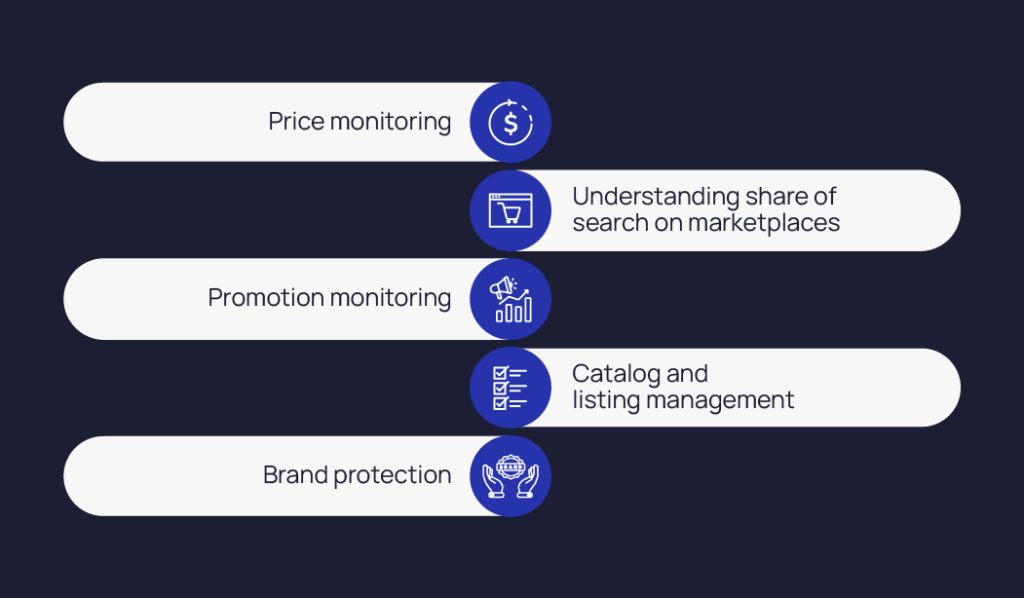
Now that we have a basic understanding of digital shelf analytics, let’s discuss how it can help you master digital shelf management. The key metrics assessed by digital shelf analytics include price monitoring, product visibility, promotion monitoring, product content monitoring, and brand protection.
To better highlight these functions, here are five use cases of how your brand can leverage the capabilities of digital shelf analytics to succeed within the e-commerce landscape:
a. Price monitoring
Context: Fluctuating prices within e-commerce marketplaces is not uncommon, especially for businesses vying for market share. Through price monitoring a part of digital shelf analytics process, you can track competitor pricing across all marketplaces and determine when competitors change prices or exceed a certain threshold.
Use case: This information allows you to compare prices and make quick adjustments to ensure you offer the best prices, not just the lowest. You can also use this data to track your overpriced and underpriced products across sales channels, identify category price and discount trends, and pinpoint which price segments are driving category growth.
b. Understanding share of search on marketplaces
Context: The majority of online shoppers seek out their desired products through a simple search, which is why product visibility is critical to succeed in e-commerce. A marketplace in this manner is no different than any other search engine.
Use case: Through digital shelf analytics, you can monitor your share of search for your target keywords and identify new keywords to incorporate into your product listings. By analyzing your share of search, you can also gain a real-time understanding of your ability to rank for target keywords relative to your competitors. You will notice keyword gaps or high-performing keywords that competitors are targeting and you aren’t. Armed with this information, your content managers can make informed decisions to enhance your listings.
c. Promotion monitoring
Context: Promotions are a key tool in your brand’s arsenal to drive sales growth. However, promotions aren’t always effective. In several instances, brands either offer too heavy a discount, signaling poor quality, or they don’t offer enough of a discount, making their offer less enticing to buyers.
Use case: Through promotion monitoring (as part of your digital shelf analytics), you can identify winning strategies from competitors, evaluate the performance of existing promotional campaigns, and utilize this data to optimize your campaigns. For instance, you can assess how often competitors run promotions, types of promotions used, and even the channels they prioritize when running these campaigns. This data can even extend to customer behavior, identifying best-selling products and which customer segments responded best during the promotional period.
d. Catalog and listing management
Context: Before customers hit the buy button, their perception of your brand and product is directly influenced by the accompanying content online. Inconsistent product descriptions and poor images across different marketplaces may cause conversion rates to drop.
Use case: Through catalog and listing management, you can automate, standardize, and enhance product information across all channels, ensuring consistent branding across multiple marketplaces. This ultimately improves customer trust, boosts sales, and saves valuable time for marketplace managers.
e. Brand protection
Context: Unfortunately for brands, it’s become a common occurrence to have premium products duped or resold by unauthorized sellers. This can potentially damage your reputation as customers associate high-quality products with high prices.
Use case: With the right brand protection tool, you can safeguard your brand’s integrity by identifying and addressing grey market sellers. This will help ensure that only authorized retailers sell your products at the correct price points.
3. Conclusion
If you want your brand to leverage relevant data to amplify your online presence, proactive digital shelf management supported by data-driven analytics is key. Through digital shelf software, you can closely monitor crucial factors such as pricing, placement, promotions, product content, and brand protection. This data will allow you to make strategic decisions in real-time, ultimately elevating your e-commerce approach.
With solutions such as Digital Shelf technology and real-time sales, inventory, and pricing and promotion reports, you can navigate the e-commerce space with ease. To maximize product visibility and stay ahead of the competition with advanced analytics, reach out to our experts today!
References –
[1] – Statista.com – Retail e-commerce sales worldwide from 2014 to 2027
[2] – Usatoday.com – That review you wrote on Amazon? Priceless