
Omnichannel Vs Multichannel Ecommerce: เจาะลึกความต่างที่แบรนด์ต้องรู้
บทความ
อยากเพิ่มยอดขาย ต้องขยายร้านไปกี่ช่องทางถึงจะพอ?
ทุกวันนี้พฤติกรรมของนักช้อปเปลี่ยนไปมาก พวกเขาสามารถสลับไปมาระหว่างแอปพลิเคชัน อุปกรณ์ และแพลตฟอร์มต่าง ๆ ได้อย่างลื่นไหลไม่มีสะดุด โดยพบว่ามีผู้บริโภคถึง 73% ที่เลือกใช้หลากหลายช่องทางในการเช็กข้อมูลก่อนจะตัดสินใจซื้อสินค้า [1] แต่ในความเป็นจริง แบรนด์อีคอมเมิร์ซมากกว่าครึ่งกลับยังแยกกันบริหารจัดการแต่ละช่องทางแบบต่างคนต่างทำ ส่งผลให้ประสบการณ์ของลูกค้าขาดตอน เกิดความติดขัด และทำให้แบรนด์ต้องสูญเสียโอกาสในการปิดการขายไปอย่างน่าเสียดาย
นี่จึงเป็นเหตุผลว่าทำไม “แนวคิด” ในการจัดการระบบถึงสำคัญ วิธีที่คุณเชื่อมโยงและจัดระเบียบช่องทางขายต่าง ๆ นำไปสู่ 2 กลยุทธ์หลัก นั่นคือ Multichannel และ Omnichannel แม้ว่าทั้งสองรูปแบบจะเป็นการขายสินค้าในหลายพื้นที่เหมือนกัน แต่สิ่งที่ต่างกันอย่างสิ้นเชิงคือ วิธีการทำงานร่วมกัน และประสิทธิภาพในการเชื่อมต่อ ของแต่ละช่องทาง
ในบทความนี้ เราจะพาไปเจาะลึกว่าแต่ละโมเดลคืออะไร มีความแตกต่างกันอย่างไร และแบรนด์ชั้นนำในปัจจุบันกำลังปรับตัวอย่างไรบ้าง เพื่อช่วยให้คุณมองเห็นภาพได้ชัดเจนยิ่งขึ้นว่า แนวทางแบบไหนที่จะตอบโจทย์ความคาดหวังของลูกค้า และเหมาะสมกับศักยภาพการทำงานของทีมคุณมากที่สุด
Multichannel E-commerce คืออะไร? ช่องทางการขายที่หลากหลายเพื่อเข้าถึงลูกค้าทุกคน
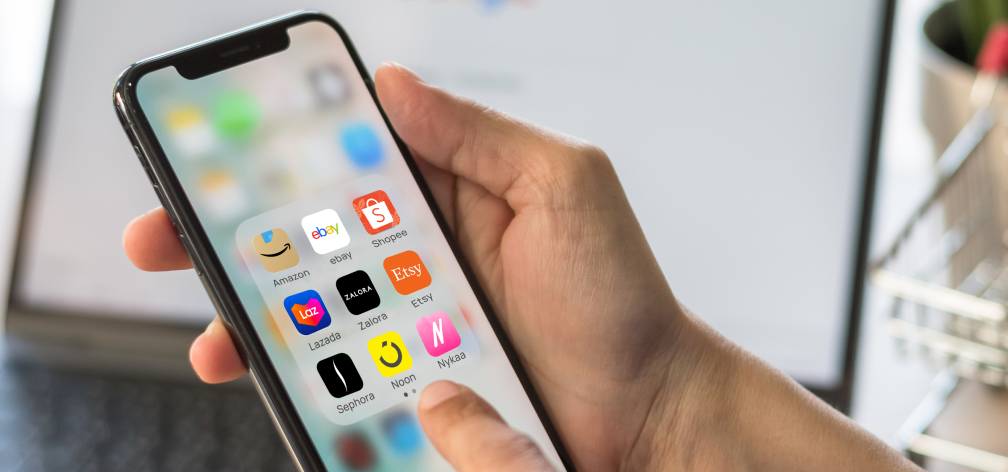
Multichannel E-commerce คือ แนวคิดการขายสินค้าผ่านช่องทางที่หลากหลายและเป็นอิสระต่อกัน ไม่ว่าจะเป็นหน้าเว็บไซต์ของคุณเอง, มาร์เก็ตเพลสยอดฮิตอย่าง Shopee, Lazada, TikTok Shop, ช่องทางโซเชียลมีเดีย, การทำแคมเปญอีเมล รวมถึงการมีหน้าร้านแบบออฟไลน์ (Physical Store) โดยในแต่ละช่องทางจะขับเคลื่อนด้วยตัวเอง มีการจัดการคอนเทนต์ ข้อมูลสินค้า และเป้าหมายการขายที่แยกจากกัน ซึ่งข้อดีคือช่วยให้แบรนด์สามารถเข้าถึงลูกค้าได้ในทุกแพลตฟอร์มที่พวกเขาชอบช้อปปิ้ง
ทว่า ช่องทางเชื่อมต่อเหล่านี้มักไม่ได้เชื่อมโยงข้อมูลเข้าด้วยกัน ลูกค้าอาจจะเห็นข้อความโฆษณาแบบหนึ่งบน Instagram ได้รับข้อเสนอโปรโมชันอีกแบบใน Shopee และเมื่อเปิดเข้ามาดูที่หน้าเว็บไซต์ของแบรนด์ก็อาจจะเจออะไรที่แปลกใหม่ไปเลย ทำให้ประสบการณ์ที่ลูกค้าได้รับจะเปลี่ยนไปตามแพลตฟอร์มที่พวกเขาเลือกเข้าไปปฏิสัมพันธ์กับแบรนด์
ยกตัวอย่างให้เห็นภาพง่าย ๆ: สมมติว่าเป็นแบรนด์สกินแคร์แบรนด์หนึ่ง บนหน้าเว็บไซต์หลักพวกเขาอาจจะกำลังโปรโมต “เซตสินค้าจัดราคาพิเศษแบบจำกัดเวลา” แต่ในคอนเทนต์บน Instagram กำลังเน้นรีวิว “ไอเทมเด็ดชิ้นเดี่ยว” ในขณะเดียวกันก็จัด “โค้ดส่วนลดพิเศษ” บนร้านค้าในมาร์เก็ตเพลส ซึ่งแต่ละช่องทางต่างทำหน้าที่ของตัวเองไป โดยไม่ได้มีการประสานงานหรือแชร์ข้อมูลเชื่อมโยงกันอย่างชัดเจน
Omnichannel E-commerce คืออะไร? ประสบการณ์การช้อปแบบไร้รอยต่อที่เชื่อมทุกช่องทางเป็นหนึ่งเดียว
Omnichannel E-commerce คือ การสร้างประสบการณ์ที่สอดคล้องและเชื่อมโยงกันอย่างสมบูรณ์แบบในทุก ๆ จุดสัมผัส (Touchpoint) ที่ลูกค้าเข้ามาปฏิสัมพันธ์กับแบรนด์ ไม่ว่าลูกค้าจะกำลังเลือกดูสินค้าผ่านแอปพลิเคชันมือถือ, ทักแชตคุยกับฝ่ายสนับสนุน, เดินเข้ามาซื้อที่หน้าร้านออฟไลน์ หรือมีส่วนร่วมผ่านอีเมลและโซเชียลมีเดีย ทั้งข้อความสื่อสาร (Messaging) จำนวนสินค้าพร้อมขาย (Inventory) และข้อมูลของลูกค้าจะถูกซิงค์ให้อัปเดตตรงกันตลอดเวลา
แนวทางนี้ช่วยให้ลูกค้าสามารถสลับสับเปลี่ยนช่องทางไปมาได้อย่างลื่นไหลไม่มีสะดุด ตัวอย่างเช่น นักช้อปคนหนึ่งอาจจะเช็กจำนวนสินค้าในสต็อกผ่านออนไลน์ จากนั้นกดจองสินค้าไว้ แล้วค่อยเดินไปรับของด้วยตัวเองที่หน้าร้าน หลังจากนั้นก็ได้รับอีเมลแนะนำข้อเสนอสินค้าชิ้นอื่น ๆ ที่เกี่ยวข้องตามมา ซึ่งพฤติกรรมทั้งหมดนี้จะถูกบันทึกกลับไปยัง “ข้อมูลโปรไฟล์ของลูกค้าเพียงหนึ่งเดียว” (Single Customer Profile) ความต่อเนื่องในระดับนี้นี่เองที่เป็นจุดต่างสำคัญที่ทำให้ Omnichannel เหนือกว่า Multichannel
แบรนด์ระดับลักชัวรีอย่าง Gucci และ Dior [2] ถือเป็นผู้นำที่โดดเด่นมากในการทำ Omnichannel พวกเขาเชื่อมโยงจุดสัมผัสทั้งในโลกออฟไลน์และดิจิทัลเข้าด้วยกัน [3] โดยการนำเทคโนโลยี AI มาช่วยวิเคราะห์เพื่อนำเสนอสิ่งเฉพาะบุคคล (Personalization), มีระบบไลฟ์แชตคอยบริการ และใช้ระบบสมาชิก (Loyalty Program) แบบบูรณาการ เพื่อดูแลและนำทางลูกค้าตั้งแต่ขั้นตอนการค้นพบแบรนด์ ไปจนถึงการตัดสินใจซื้อ และบริการหลังการขาย
แต่การจะทำให้ Omnichannel ประสบความสำเร็จได้นั้น ระบบหลังบ้าน (Backend) จำเป็นต้องเชื่อมต่อกันอย่างเหนียวแน่นไม่แพ้ประสบการณ์เบื้องหน้าของลูกค้า นั่นหมายความว่าคุณต้องมีระบบที่สามารถดึงข้อมูลทั้งหมดมารวมไว้ในที่เดียว และคอยซิงค์คำสั่งซื้อจากทุกช่องทางให้เป็นปัจจุบันอยู่เสมอ
การวางระบบจัดการคำสั่งซื้อ (Order Management) ที่แข็งแกร่ง จะช่วยให้แบรนด์ติดตามสต็อกสินค้า, ประมวลผลยอดขายจากแพลตฟอร์มต่าง ๆ และส่งยอดอัปเดตแบบเรียลไทม์ให้ลูกค้าได้อย่างแม่นยำ ดังนั้น ไม่ว่าลูกค้าจะซื้อผ่านช่องทางออนไลน์, ซื้อที่หน้าร้าน หรือซื้อผ่านแอป เป้าหมายสูงสุดก็ยังคงเดิม นั่นคือ การมอบประสบการณ์ที่ราบรื่นและสม่ำเสมอตั้งแต่เริ่มต้นจนจบกระบวนการ
สรุปข้อแตกต่างสำคัญระหว่าง Omnichannel และ Multichannel E-commerce
แม้ว่าทั้ง Omnichannel และ Multichannel จะเป็นการขายสินค้าผ่านหลากหลายแพลตฟอร์มเหมือนกัน แต่ประสบการณ์ที่ลูกค้าจะได้รับจากทั้งสองรูปแบบนี้แตกต่างกันอย่างสิ้นเชิง
ในระบบ Multichannel แพลตฟอร์มต่าง ๆ จะทำงานแยกจากกันเป็นเอกเทศ ทำให้ทั้งข้อความที่ใช้สื่อสาร ข้อมูลลูกค้า และการบริการ มักจะถูกเก็บแยกกันอยู่ตามแต่ละช่องทาง (Siloed) ในขณะที่ระบบ Omnichannel จะเชื่อมโยงทุกจุดสัมผัสเข้าด้วยกันทั้งหมด ลูกค้าจึงสามารถเริ่มช้อปจากช่องทางหนึ่ง แล้วไปเลือกซื้อต่อจากจุดเดิมในอีกช่องทางหนึ่งได้อย่างไร้รอยต่อ โดยข้อมูลสินค้าในตะกร้า สิ่งที่ชอบ และประวัติการติดต่อเจ้าหน้าที่ จะติดตามตัวลูกค้าไปในทุก ๆ แพลตฟอร์ม
สิ่งนี้เองที่ทำให้ประสบการณ์การช้อปปิ้งแบบ Omnichannel ให้ความรู้สึกที่ลื่นไหล มีความเป็นส่วนตัว และสม่ำเสมอในทุก ๆ ครั้งที่มีการปฏิสัมพันธ์กับแบรนด์
เรามาเจาะลึกดูข้อแตกต่างที่สำคัญในแต่ละด้านกันเลย
| หัวข้อเปรียบเทียบ | Multichannel E-commerce | Omnichannel E-commerce |
| โครงสร้างช่องทางการขาย | แต่ละช่องทางทำงานแยกกันเป็นอิสระ | ทุกช่องทางเชื่อมโยงกัน และแชร์ข้อมูลลูกค้าแบบเรียลไทม์ |
| ประสบการณ์ของลูกค้า | ไม่ต่อเนื่องและแตกต่างกันไปตามแพลตฟอร์ม | ลื่นไหล ไร้รอยต่อ และต่อเนื่องในทุกจุดสัมผัส |
| การแชร์ข้อมูล | ข้อมูลลูกค้าและยอดขายถูกจัดเก็บแยกกันตามช่องทาง | ข้อมูลลูกค้าถูกรวมไว้ที่ศูนย์กลาง (Centralized) และมีระบบวิเคราะห์ข้อมูลภาพรวม |
| กลยุทธ์การตลาด | ทำแคมเปญแยกตามช่องทาง โดยไม่มีการประสานงานกัน | ทำแคมเปญข้ามแพลตฟอร์ม พร้อมส่งข้อความเฉพาะบุคคลตามพฤติกรรมผู้ใช้ |
| เทคโนโลยีที่ต้องใช้ | ไม่สูงมาก สามารถเริ่มต้นด้วยระบบพื้นฐานได้ | สูง ต้องใช้ระบบที่เชื่อมโยงกัน (เช่น OMS, WMS, CRM, POS) |
| การจัดการคำสั่งซื้อ | แยกกันจัดการตามช่องทาง สต็อกมักจะแยกจากกัน | ระบบสต็อกและการจัดการคำสั่งซื้อรวมเป็นหนึ่ง รองรับระบบ BOPIS, BOSFS, BORIS* |
| ประสบการณ์การบริการลูกค้า | ทุกการติดต่อต้องเริ่มเล่าใหม่ บริบทเดิมจะหายไป | ทีมสนับสนุนสามารถเข้าถึงประวัติการติดต่อก่อนหน้าได้จากทุกช่องทาง |
| การทำ Personalization | จำกัดอยู่แค่ฟังก์ชันที่มีในแต่ละแพลตฟอร์มเท่านั้น | เจาะลึกได้มากกว่าด้วยการวิเคราะห์พฤติกรรมและข้อมูลการซื้อขายที่รวมเป็นหนึ่งเดียว |
| การขยายตัวของธุรกิจ | เริ่มต้นง่าย แต่การดูแลให้เติบโตในระยะยาวทำได้ยาก | เริ่มต้นซับซ้อนกว่า แต่ขยายธุรกิจได้มีประสิทธิภาพมากกว่าด้วยระบบศูนย์กลาง |
| เหมาะสำหรับใคร | ธุรกิจระยะเริ่มต้น หรือมีงบจำกัด ที่ต้องการทดสอบช่องทางการขายใหม่ ๆ | แบรนด์ที่เน้นการเติบโต มุ่งสร้างความภักดี (Retention) มูลค่าตลอดชีพของลูกค้า (LTV) และความคล่องตัวในการทำงาน |
Benefits and Drawbacks of Multichannel E-commerce
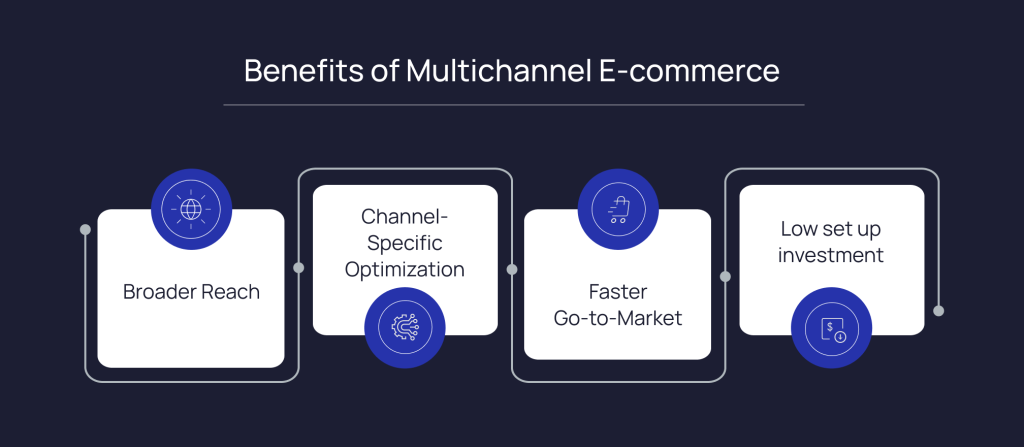
Multichannel e-commerce is often the default choice for growing businesses. It’s also the first step towards omnichannel retail. It enables broad market exposure by allowing you to meet customers on multiple platforms without requiring full system integration.
Benefits
1. Broader Reach
Selling across multiple platforms like Amazon, Instagram, email, and in-store means reaching different customer segments. It’s an effective way to expand visibility without needing a centralized tech stack.
2. Channel-Specific Optimization
Each channel can be customized independently. Your marketing team can test creatives on Facebook while your email campaigns follow a different strategy based on open rates or seasonal promotions.
3. Faster Go-to-Market
Launching a product or campaign in a multichannel environment is often quicker. You don’t need to wait for cross-channel syncing or full backend integration to get started.
4. Low set up investment
There’s less upfront investment in infrastructure or data systems, as these channels may not be integrated or managed centrally.
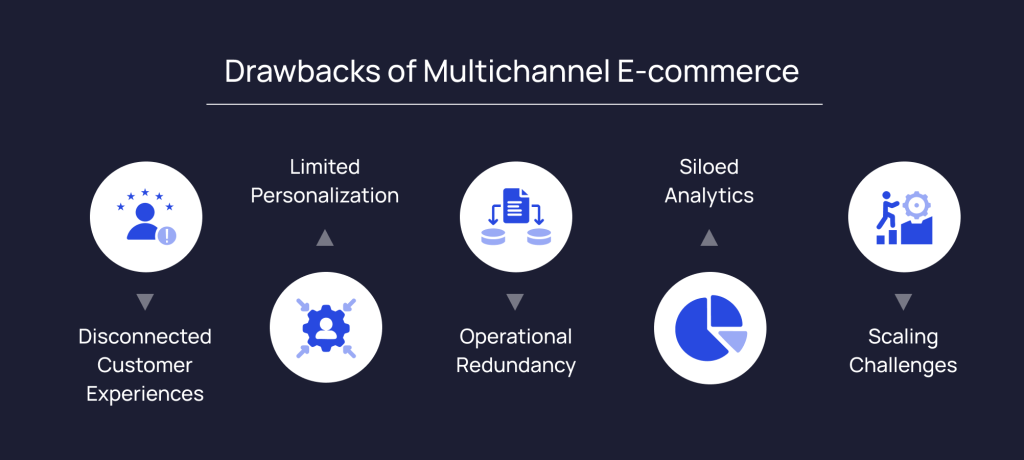
Drawbacks
1. Disconnected Customer Experiences
Because these channels don’t share customer data, interactions feel isolated. A shopper who viewed a product on your mobile website might not see a related offer via email or in your offline store.
2. Limited Personalization
Without a unified customer profile, targeting relies on channel-specific behavior. You lose the ability to deliver experiences based on a user’s full journey.
3. Operational Redundancy
Marketing and customer support often need to be managed separately for each platform in a multichannel setup, increasing workload and the risk of inconsistency.
While inventory can be centralized using a robust WMS (Warehouse Management System), businesses without one may still struggle with fragmented inventory visibility and overselling issues
4. Siloed Analytics
Data is scattered across platforms. And without consolidated data, it’s harder to see what’s truly driving conversions or where drop-offs occur.
5. Scaling Challenges
As your brand grows, disconnected systems become bottlenecks. Keeping inventory synced, aligning messaging, or coordinating support across platforms becomes increasingly complex.
Benefits and Drawbacks of Omnichannel E-commerce
Omnichannel e-commerce creates a unified shopping experience across every channel, driven by centralized data and integrated systems. While more complex to implement, the payoffs are substantial.
Benefits
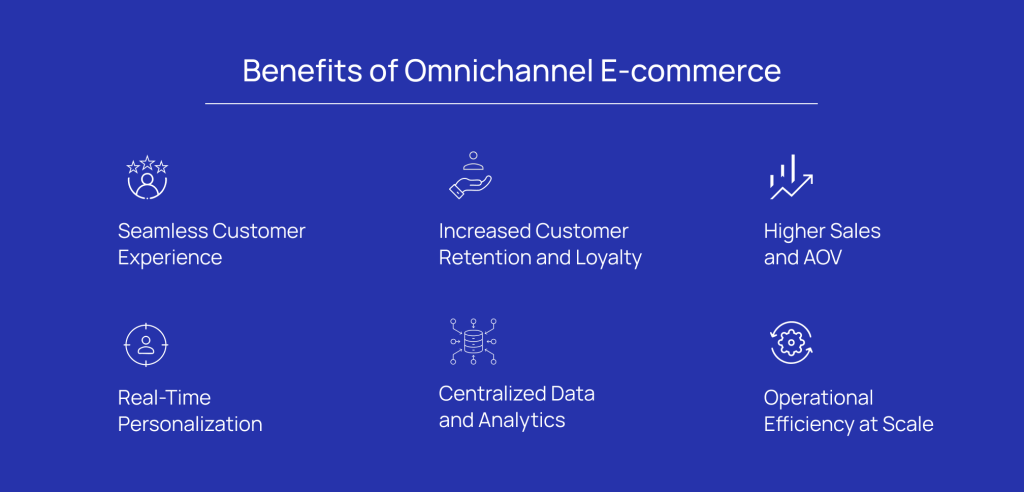
1. Seamless Customer Experience
Customers can browse a product online, receive a reminder via SMS, and complete the purchase in-store without restarting the process. This consistency improves satisfaction and reduces friction.
2. Increased Customer Retention and Loyalty
Brands with strong omnichannel strategies retain up to 89% of their customers, compared to 33% [4] for those with weak integration.
3. Higher Sales and AOV
According to Harvard Business Review [5], omnichannel customers spend 10 percent more online and 4 percent more in-store than single-channel customers. Unified experiences drive confidence and repeat purchases.
4. Real-Time Personalization
With connected customer data, brands can trigger personalized offers, product recommendations, and re-engagement campaigns based on real behavior, not just assumptions.
5. Centralized Data and Analytics
Insights from all touchpoints feed into one system, helping brands understand lifetime value, attribution, churn triggers, and more.
6. Operational Efficiency at Scale
Unified systems reduce duplicated effort. Inventory, support, and campaign management become easier to scale when managed from a central platform.
Omnichannel success also depends on the ability to manage inventory across a distributed network of fulfillment centers and retail locations. Optimizing multi-warehouse operations ensures that orders are routed from the most efficient location, reducing shipping time, costs, and stockouts.
Drawbacks
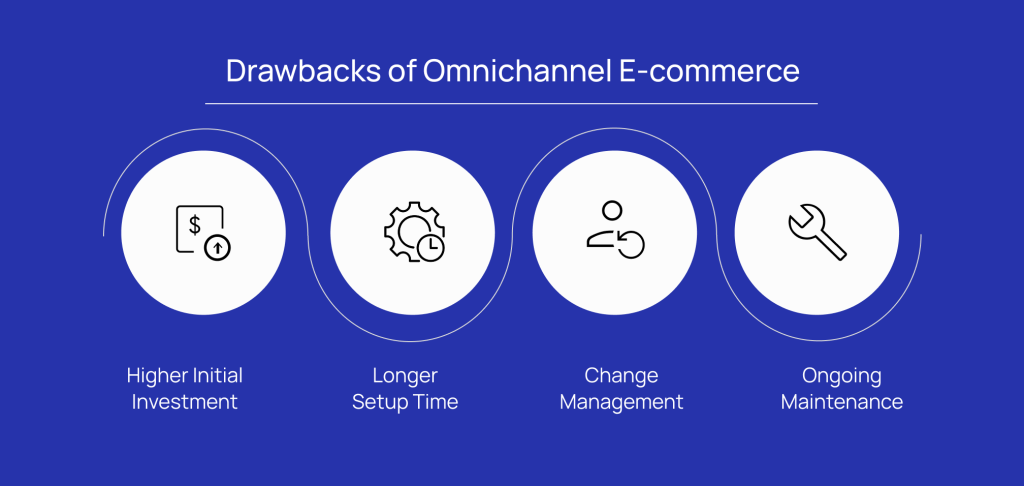
1. Higher Initial Investment
Implementing an omnichannel system requires robust infrastructure like CRM, CDP, API integrations, and automation tools, which may be too expensive upfront.
2. Longer Setup Time
Aligning systems, teams, and data workflows can take time. Launching omnichannel properly is a phased effort, not a plug-and-play solution.
3. Change Management
Shifting to omnichannel means cross-functional collaboration between marketing, sales, IT, and customer service. Misalignment across teams can slow progress.
4. Ongoing Maintenance
Integrated ecosystems require regular updates, testing, and data hygiene to ensure performance and accuracy. This can be time-consuming if not strategically implemented.
When to Choose Omnichannel vs Multichannel
Choosing between omnichannel and multichannel e-commerce depends on your current infrastructure, team capabilities, business model, and customer expectations. One is not inherently better than the other; rather, it’s about choosing the right one as per your current stage of your business and resources.
Choose Multichannel if:
- You’re early in your e-commerce journey and need fast, cost-effective channel launches
- Your team lacks technical resources to integrate systems
- You’re experimenting with different marketplaces or regional markets before scaling
- Your channels operate with different goals or teams and do not require tight integration
Best for: Early-stage brands, lean teams, or businesses testing new sales channels. That said, you can still centrally manage these channels via an order management system.
Choose Omnichannel if:
- You want to offer a consistent and personalized experience across all touchpoints
- You already have multiple channels and want to improve data flow and efficiency
- You manage significant order volumes and need automation to scale
- You want to support BOPIS, BOSFS, BORIS, or in-store returns from online purchases
- Customer loyalty and lifetime value are key performance indicators for your business
Best for: Scaling retailers, experience-driven brands, and businesses with cross-functional teams managing e-commerce, retail, and marketing.
Bear in mind, the cost of poor coordination is high. Customers expect convenience, speed, and personalization across all platforms. Brands that succeed in meeting those expectations, like Nike and Sephora, are building long-term loyalty [6] and competitive advantage through omnichannel commerce.
Case Study: How a 100+ Store Retail Giant in the Philippines Transformed with Omnichannel
One of the fastest-growing retail and distribution companies in Southeast Asia, with over 100 stores across 10 countries, hit a critical inflection point. After years of success in B2B, it was ready to expand into B2C e-commerce and build a true omnichannel operation. But scaling came with serious challenges.
The brand had strong partnerships with more than 150 global names in fashion, lifestyle, wellness, and sportswear. What it didn’t have was the infrastructure to support 15,000 to 20,000 online orders each month or connect its stores to its e-commerce engine.
Warehouse management was fragmented. Fulfillment workflows were stitched together manually. Onboarding new brands took a lot of time and effort. Without a unified system, delivering a seamless experience across channels was proving difficult, and slowed their growth.
The Turning Point
The company partnered with Anchanto to modernize its operations from the inside out. With Anchanto’s Order Management and Warehouse Management Systems, it was able to:
- Map offline stores as fulfillment hubs for BOPIS, BORIS, and BOSFS operations
- Automate inventory across multiple warehouses
- Onboard brands faster with centralized catalog and pricing management
- Integrate with platforms like PrestaShop and iRipple to bridge online and offline systems
This enabled real-time inventory visibility, faster order routing, and seamless cross-channel fulfillment, which are cornerstones of any effective omnichannel model.
Today, the company runs multichannel and omnichannel commerce at scale with better data accuracy, fulfillment agility, and reduced operational overhead. More importantly, it’s now positioned to respond quickly to market shifts and rising consumer expectations for convenience.
Read the complete case study here.
Conclusion
Choosing between omnichannel and multichannel e-commerce depends on your growth stage, resources, and customer expectations. Multichannel allows fast expansion across platforms but on its own, it lacks coordination between channels. Omnichannel takes more effort to implement, yet offers a consistent customer experience, centralized data, and greater retention over time.
If you’re focused on streamlining operations, reducing fulfillment errors, and building lasting customer relationships, omnichannel is the better long-term bet. But if you’re in the early stages, multichannel can be a smart way to test the waters.
In the end, the right choice depends on where your business stands now and where you want it to be tomorrow.
Looking to implement a unified order workflow across your e-commerce and offline retail operations?
Explore Anchanto’s Order Management System to centralize orders, automate fulfillment, and deliver consistent omnichannel experiences from a single dashboard. Built for scale, designed for speed.
FAQ
1. What is the difference between omnichannel and multichannel e-commerce?
Omnichannel e-commerce integrates all customer-facing platforms, which include web, mobile, physical store, and social media into one cohesive experience. Multichannel e-commerce uses multiple channels independently. In omnichannel, data and messaging flow across touchpoints, while in multichannel, each channel operates in isolation.
2. Why is omnichannel important for e-commerce brands?
Omnichannel matters because customers expect seamless experiences. Brands that unify online and offline channels often see higher loyalty, more repeat purchases, and better lifetime customer value compared to those with disconnected strategies.
3. What are the key components of an effective omnichannel fulfillment strategy?
An effective strategy includes unified inventory across all locations, real-time stock visibility, flexible fulfillment options like BOPIS or ship-from-store, and smart order routing to reduce delivery times and stockouts.
4. How does multichannel marketing differ from cross-channel marketing?
Multichannel marketing runs campaigns separately across each platform without linking user activity. Cross-channel marketing tracks customer behavior across platforms and delivers personalized, coordinated messaging that responds to previous interactions.
5. Can omnichannel e-commerce work for small or medium-sized brands?
Yes. Omnichannel is scalable. Smaller brands can start with essentials like in-store pickup or centralized inventory visibility, then expand into full integration using order and warehouse management tools as they grow.
References:
[1] Hbr.org – A Study of 46,000 Shoppers Shows That Omnichannel Retailing Works
[2] Voguebusiness.com – Gucci, Dior and Burberry battle for omnichannel top spot
[3] Forbes.com – Weaving Elegance With Intelligence: How Luxury Brands Are Embracing AI
[4] Firework.com – 52+ Omnichannel Stats You Can’t Afford to Ignore in 2024 (Or Risk Losing Customers!)
[5] Hbr.org – A Study of 46,000 Shoppers Shows That Omnichannel Retailing Works
[6] Mckinsey.com – The winning formula: What it takes to build leading omnichannel operations