

Key Takeaways:
- The APAC e-commerce market is valued at US$ 4.86 trillion in 2026, growing at 8.98% CAGR to reach US$ 7.47 trillion by 2031.
- Shopee, Lazada, TikTok Shop, and Tokopedia dominate Southeast Asia, while Coupang, Naver, and Rakuten lead East Asia.
- TikTok Shop generated US$ 32 billion in Southeast Asian GMV in 2024, making it a critical channel for any Asian marketplace online strategy.
- Enterprise brands operating across the region face distinct integration, fulfillment, and compliance requirements per marketplace, per country.
- This guide covers 40 marketplaces, selection criteria, consumer behavior trends, and where to sell online across APAC.
Why APAC is the fastest-growing e-commerce region
The APAC e-commerce market is projected to grow from US$ 4.86 trillion in 2026 to US$ 7.47 trillion by 2031 at a CAGR of 8.98%, with Southeast Asia among the region’s strongest growth engines. [1] Cross-border trade accords such as RCEP are also helping reduce shipping friction, while countries such as the Philippines are forecast to expand at a 16.7% CAGR through 2031. [1]
For enterprise brands, the APAC e-commerce opportunity is substantial but fragmented: no single marketplace leads across the region. Different platforms dominate each major market, from Shopee and Lazada in Southeast Asia to Coupang and Naver in South Korea and Taobao and JD.com in China, so regional sellers must operate across multiple marketplaces at once. [1]
Top 40 APAC e-commerce marketplaces
We have curated a list of the top 40 online marketplaces across APAC, Europe, the UK, the USA, and Africa with potential buyers across APAC (presented in alphabetical order) to help you choose the best ones for your business.
1. AliExpress
One of the top e-commerce platforms in the world, AliExpress, based in China and owned by Alibaba Group, was launched in 2010. It is a global e-commerce platform made up of small businesses offering a wide variety of consumer products worldwide. It runs its websites in English, Spanish, Dutch, French, Italian, German, Polish, Turkish, Portuguese, Indonesian, and Russian languages. It facilitates small businesses to sell across borders.
- Region: Global (China HQ)
- No. of Total Visits: 504.8M
- No. of Active Buyers: 150 Million
- Product Category: General
2. Amazon
Amazon started in 1994 in the United States of America as an online book store, and over the years, it has become one of the largest e-commerce platforms in the world and also offers its own brand of products. Sellers need to pay only referral fees and closing fees. There are no separate fees for listing, payment collection, and/or subscription. Businesses that have long, positive selling histories, practice competitive pricing and frequent promotion campaigns with Amazon have better chances of obtaining one of the top spots. This will also enable them to win the Amazon Buy Box [4] button which has shown increased sales for many merchants.
- Regions: Global
- No. of Monthly Visits: 5.2B
- Product Category: General
- Market Share: 37.6% [5]
3. BliBli
BliBli, an initial pioneer of the online shopping mall, offers thousands of products to choose from across 15 categories on its platform. Blibli provides a feature called “My BliBli” that allows its customers to customize their shopping experience. Shoppers can choose their favorite product categories and stores, make their own wishlists, monitor their shopping histories, and manage their purchasing points and special coupons through this feature.
- Region: Indonesia
- No. of Monthly Visitors: ~29.6M
- Product Category: General
- Market Share: ~9% in Indonesia [6]
4. Bukalapak
Launched in 2010, Bukalapak allows its merchants and sellers to digitally sell their goods without investing a large amount of capital to make transactions. Bukalapak’s first major success was when folding bicycles started trending in 2010. The platform shifted focus toward Mitra Bukalapak, enabling warungs (small street-level shops) to digitize procurement and offer digital services.
- Region: Indonesia
- No. of Monthly Visitors: 38.58M
- Product Category: General
- Market Share: ~10% in Indonesia
5. Coupang
Coupang puts customers first and has developed a unique business model that is powered by speed and agility. Their same-day delivery and early morning delivery are some of the reasons why customers like shopping with them [7]. They have over 100 distribution centers, with a total size of 2.3 million square meters, capable of storing millions of products. Coupang has over 23 million active customers as of Q1 2025.
- Region: South Korea
- No. of Registered Users: 23M+
- Product Category: General
- Market Share: 39.7% in South Korea [8]
6. eBay
One of the best online e-commerce platforms, eBay, was founded in 1995. It is a multinational e-commerce company that provides C2C online sales services and it has risen to become a retail powerhouse leading the e-commerce space. eBay offers both fixed and listing-based pricing, which means that products can be sold by auction as well as “buy it now.”
- Regions: Global (APAC presence in South Korea, Australia, Japan)
- No. of Registered Users: 182M
- Product Category: General
- GMV: ~US$ 80 billion in 2025, with 52%net revenue generated from the US and 48% from generated from outside the US [9]

7. Etsy
Etsy is a marketplace that’s best known to offer handcrafted and vintage items. Founded in 2005, this marketplace is headquartered in Brooklyn, New York, USA. The platform is home to various types of sellers from hobbyists to professional artists and craftsmen. If you are a seller, you will be charged a $0.20 listing fee to sell on the marketplace. Listings expire every four months and for every sale you make, you will be charged a 5% transaction fee.
- Region: Global
- No. of Monthly Visitors: ~438M
- Product Category: Arts & Crafts, DIY, Gifts
8. Flipkart
Flipkart is one of the best online marketplaces in India. Launched in 2007, Flipkart aggressively expanded its product categories to 80 million products across different categories and subcategories. It quickly became successful after its early adoption of Cash-On-Delivery services and supporting its sellers by developing its own logistics infrastructure (Ekart). Flipkart has introduced Flipkart Advantage service for their sellers, offering dedicated storage space, quality checks, and faster delivery.
- Region: India
- No. of Monthly Visitors: ~150M
- No. of Active Sellers: 450K
- Product Category: General
- Market Share: ~48% in India [10]
9. Fruugo
Fruugo is a unique, fully localized global marketplace where shoppers in 46 countries can buy products from retailers all around the world. Its unique capability of adding different products from different cross-country sellers makes things easier for its shoppers. Since Fruugo is known for cross-border e-commerce, sellers need to keep updated catalogs and product information at all times.
- Regions: Global (46 countries)
- No. of Registered Users: 25M+
- Product Category: General
10. Gmarket
Gmarket is an e-commerce website based in South Korea. The company was founded in 2000 as a subsidiary of Interpark and was acquired by eBay in 2009. It revolutionized the collectibles market by bringing together buyers and sellers internationally. Gmarket generates revenue from sellers, who pay a fee based on the selling price and from advertising.
- Regions: South Korea, China
- No. of Monthly Visitors: 11.1M
- Product Category: General
- Market Share: ~15% in South Korea
11. Interpark
Interpark was founded in 1996 and is the first e-commerce company in Korea. It is derived as a combined word of “Internet” and “theme park”, which implies the joy of shopping on the internet.
- Regions: Global (ships products to 220 countries)
- No. of Monthly Visitors: 90M
- Product Category: General
12. JD.com
JD is China’s one-stop e-commerce platform. Its direct access to an unrivaled range of authentic, high-quality products helps leading local and international brands tap into China’s fast-growing e-commerce market. JD.com reported approximately 569.7 million annual active customers in 2023 [11]. JD.com is also one of the largest shareholders in Vietnam’s Tiki, having led its Series C investment round in 2018.
- Regions: China, Indonesia, Vietnam (via Tiki)
- No. of Annual Active Customers: ~588M (2023)
- Product Category: Electronics, apparel, home furnishings, FMCG
13. Jumia
Jumia is a leading e-commerce platform in Africa. It is built around a marketplace, Jumia Logistics, and JumiaPay. The marketplace helps millions of consumers and sellers to connect and transact. Jumia Logistics enables the delivery of millions of packages with over 40 million product categories through its network of local partners.
- Region: Africa
- No. of Annual Active Customers: 6.8M
- No. of Sellers: 110K
- Product Category: General
14. Kogan.com
Australia’s largest pure-play online retailer, founded in 2006. Kogan operates both a first-party retail business and a third-party marketplace, alongside service verticals including Kogan Mobile, Kogan Internet, and Kogan Insurance. The platform also owns Mighty Ape (New Zealand) and the Dick Smith brand. As of April 2025, Kogan.com reported 2.7 million active customers with 38% year-over-year growth, while Group Active Customers (including Mighty Ape) reached 3.4 million [12].
- Regions: Australia, New Zealand
- No. of Active Customers: 3.4M Group / 2.7M Kogan.com
- Product Category: General (electronics, home, fashion, health)
15. Lazada
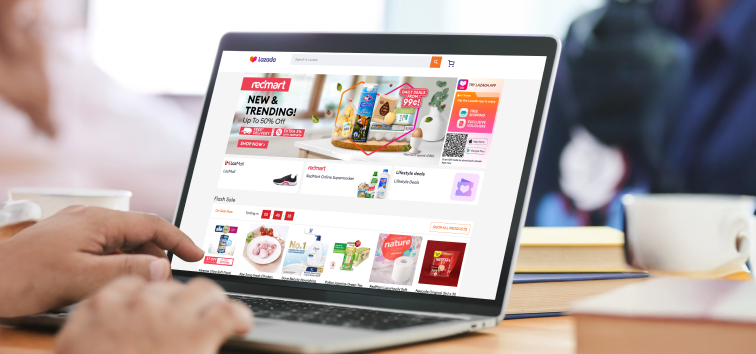
Lazada is an Asian marketplace online owned by Alibaba Group that operates in Indonesia, Malaysia, the Philippines, Singapore, Thailand, and Vietnam. The platform is a part of the daily lives of people in the regions where it operates. In fact, Lazada has one of the largest logistics and payment networks across these regions. Lazada reported 160 million monthly active users and a 170,000-strong brand ecosystem through LazMall as of late 2025.
- Regions: Southeast Asia (6 markets)
- No. of Monthly Active Users: 160M
- Product Category: General
- Market Share: ~35% GMV share in Singapore as of 2022 [13]
16. Lelong.my
Lelong.my is one of Malaysia’s earliest e-commerce platforms, founded in 1998 as an auction site. The platform has evolved into a B2C marketplace. Lelong charges a daily or yearly fee from merchants for maintaining their web store. The platform has experienced a significant decline in traffic and activity with the rise of Shopee and Lazada in the Malaysian market.
- Region: Malaysia
- Product Category: General
17. Looksi (Pomelo Fashion)
Launched in 2013, Looksi is now known as Pomelo Fashion. It is one of Southeast Asia’s omnichannel fashion platforms with a global mindset: on-trend, online, on-the-go. Pomelo reported revenue of US$ 38 million in 2022, with around 80% of revenue from its core market of Thailand.
- Regions: Southeast Asia (Thailand primary)
- No. of Monthly Visitors: 4M+
- Product Category: Women’s fashion
18. Meesho
India’s fastest-growing social commerce platform connecting manufacturers directly with resellers and consumers. Meesho’s GMV surpassed US$ 5 billion at a run rate basis in late 2023, growing faster than both Flipkart and Amazon India [14]. As of its November 2025 IPO filing, the platform recorded 234.2 million transacting users in the preceding 12 months with 706,471 annual transacting sellers. Zero-commission model for sellers. Over 50% of sales come from tier 2 and below cities.
- Region: India
- No. of Monthly Active Users: 200M+
- No. of Annual Transacting Users: 234M+
- Product Category: Fashion, home, electronics (value segment)
19. Myntra
One of the top 10 e-commerce platforms in India, Myntra is a unit of Flipkart. It is an Indian fashion and lifestyle e-commerce portal. In July 2016, Flipkart acquired Jabong through its unit Myntra for about $70 million. In February 2020, Flipkart formally shut down Jabong to shift focus completely on its premium clothing platform Myntra. Myntra has over 1,000 brands and over 90,000 products.
- Region: India
- No. of Registered Users: 50M
- Product Category: Shoes, apparel, accessories, home decor, furniture
20. Naver Shopping
Naver is a South Korean online platform operated by Naver Corporation. It debuted in 1999 as the first web portal in South Korea to develop and use its own search engine. It provides closer support through services and technology platforms for fintech, digital content, cloud services, and e-commerce. Together with Coupang, Naver Shopping controls approximately 65% of South Korea’s e-commerce market.
- Region: South Korea
- No. of Monthly Visitors: 67.5M+
- Product Category: General
- Market Share: ~25% in South Korea
21. Newegg
Founded in 2001, Newegg Inc. is the leading tech-focused eRetailer in North America that offers a comprehensive selection of the latest consumer electronics, entertainment, smart home, gaming products, and more. The platform serves over 30 million registered customers.
- Regions: Europe, South America, Asia Pacific, Middle East
- No. of Monthly Visitors: ~45M (company-reported)
- Product Category: Electronics, computing, gaming
22. Nykaa
Launched in 2012, Nykaa is a beauty and cosmetics marketplace that is gradually expanding into fashion as well. They also offer comprehensive content including product reviews, beauty how-to videos, articles by experts, and an e-beauty magazine. Their helpline helps to choose products and services best suited for customers’ needs.
- Region: India
- No. of Monthly Visitors: 40M+
- No. of Brands: 2,000+
- No. of Products: 200,000+
- Product Category: Beauty, skincare, wellness, cosmetics

23. Pinduoduo (Temu)
China’s third-largest e-commerce platform and one of the world’s fastest-growing, founded in 2015. Pinduoduo’s traffic is primarily app-based and WeChat mini-program based, meaning web traffic tools significantly undercount its actual reach. The platform introduced team purchases, social commerce programs, and a C2M (consumer-to-manufacturer) model. It is also the largest marketplace for agricultural produce in China. Pinduoduo generated US$ 34.8 billion in revenue in 2023 [15].
Internationally, Pinduoduo has expanded through Temu, which launched in September 2022 and surpassed 250 million cumulative downloads by November 2023. Temu connects consumers directly with manufacturers, offering aggressive pricing by cutting out middlemen in the supply chain.
- Region: China (domestic), Global (via Temu) Pinduoduo
- Revenue: $34.8B (2023)
- Product Category: General
24. PrestoMall
PrestoMall is Malaysia’s largest homegrown online shopping platform, which is part of Presto. Formerly known as 11Street Malaysia, PrestoMall has pivoted to operate as Malaysia’s largest multiple loyalty points redemption hub, connecting to over 20 million loyalty members.
- Regions: Indonesia, Malaysia, China, Hong Kong
- No. of Loyalty Members: 20M+
- Product Category: General / loyalty redemption
25. Qoo10
Qoo10 was established in 2010, it is a joint venture between Gmarket founder Ku Young Bae and eBay. The company currently operates 7 localized online marketplaces in 5 countries across Asia-Pacific. Qoo10 stands for Q for Quest, oo for searching, and 10 means comprehensiveness.
- Regions: Southeast Asia (Singapore, Japan, Indonesia, Malaysia, Hong Kong)
- No. of Monthly Visitors: 5.65M+
- No. of Registered Users: 25M+
- Product Category: General
26. Rakuten
Rakuten was founded in 1997 and is the third-largest e-commerce marketplace company worldwide. It is a tech company that offers electronic commerce solutions in Japan and internationally. The company operates in three segments: internet services, finance services, and others. The Rakuten Super Points loyalty ecosystem drives repeat purchases and cross-service engagement.
- Regions: Japan (primary), Western Europe, Asia
- No. of Visitors: 120M
- No. of Sellers: 49,000+
- Product Category: General
27. Sendo (SenMall)
Sendo or SenMall was launched in September 2012, originally an e-commerce project of FPT Online JSC. Currently, Sendo is one of the most popular e-commerce platforms in Vietnam and playing as the largest C2C marketplace in local tier 2 cities. It helps online shoppers find daily deals, promotions, and handbooks with product listings across multiple categories.
- Region: Vietnam
- No. of Products: 8M+
- No. of Sellers: 500,000+
- No. of Customers: 12M+
- Product Category: Clothing, homeware, cosmetics, tech accessories
28. Shopee
Shopee is one of the top e-commerce platforms of Singapore that started as a consumer-to-consumer (C2C) marketplace but has since moved into both a C2C and business-to-consumer (B2C) hybrid model. In 2017, it extended its product called Shopee Mall with 200 brands in Singapore. In Indonesia alone, Shopee attracted 133.1 million monthly web visits in 2024 with 36% market share. In late 2025, Shopee embedded live-stream commerce inside TikTok videos as a revenue-sharing model.
- Regions: Southeast Asia and Taiwan
- No. of Monthly Visitors: 260.3M
- Product Category: General
29. Snapdeal
Snapdeal is India’s largest no-frills, value-focused marketplace. It has over 200 million listings and offers a wide selection of value-focused products across 600 categories such as home, kitchen, apparel, fashion accessories, mobile and electronics, books, and more. Investors include SoftBank, Alibaba, Temasek, and BlackRock.
- Region: India
- No. of Downloads: 100M
- No. of Sellers: 300,000+
- Product Category: General
30. Taobao
Taobao began as an online selling site in 2003 and has become the largest online marketplace in the world. Taobao’s MAU reached 944 million in late 2024 [16]. Taobao Live has become a major live commerce channel within the Alibaba ecosystem.
- Region: China
- No. of MAU: 944M (late 2024)
- Product Category: General
31. Tata CLiQ
Owned by TataUniStore Limited of Tata Group, Tata CLiQ is an India-based marketplace located in Mumbai, Maharashtra. It is a multi-category e-commerce platform operating across fashion, footwear, accessories, electronics, and luxury. Tata CLiQ has a unique omnichannel marketplace model offering quicker delivery (shipping from store), easy pick-up and returns, across 1,200+ brands and 1,000 stores in 100+ Indian towns and cities.
- Region: India
- No. of Brands: 1,200+
- Product Category: General (fashion, electronics, luxury)
32. The Iconic
Since 2011, The Iconic is the leading fashion and lifestyle retail solution in Australia and New Zealand. It connects Australian and New Zealand fashion and sports lovers through curated digital experiences.
- Regions: Australia, New Zealand, Latin America
- No. of Monthly Visits: ~7.5M
- Product Category: Fashion, sportswear, lifestyle
33. TheMarket
Launched in August 2019, TheMarket.com is a curated lifestyle marketplace that has millions of products and thousands of labels from international, New Zealand, and niche brands.
- Region: New Zealand
- No. of Products: 1.5M+
- Product Category: Fashion, home, electronics, beauty, sports
34. Tiki
Tiki is Vietnam’s fastest-growing B2C e-commerce platform featuring more than 300,000 products in 12 categories of electronics, lifestyle, and books. The company achieves the highest customer satisfaction rate and the lowest return rate among all e-commerce businesses in Vietnam due to its capability to control the end-to-end supply chain.
- Region: Vietnam
- No. of Monthly Visitors: 22.26M
- Product Category: Electronics, lifestyle, books
35. TikTok Shop
TikTok’s integrated e-commerce feature has grown into a major marketplace across APAC, supported by TikTok’s global base of 1.59 billion monthly active users [17]. TikTok Shop generated a GMV of US$ 32 billion in Southeast Asian in 2024 [18]. In Indonesia, TikTok Shop merged with Tokopedia following regulatory changes. The platform is content-driven: most purchases happen through short-form video discovery and livestream commerce rather than search. For enterprise brands, TikTok Shop requires a fundamentally different operational model built on creator partnerships, live commerce scheduling, and rapid fulfillment for impulse-driven order spikes.
- Regions: Southeast Asia, US, Europe, UK
- No. of Global MAU: 1.59B
- Product Category: Beauty, fashion, health, electronics
36. Tmall
Launched in April 2008, Tmall.com is an extension platform backed by Alibaba that provides a comprehensive shopping experience for Chinese consumers in search of top-quality branded merchandise. A large number of international and Chinese brands and retailers have established storefronts on Tmall. Tmall Global enables cross-border sales into China without requiring a local entity.
- Region: China
- No. of Monthly Visitors: 500M
- No. of Brands: 25,000
- Product Category: General (brand-focused)
37. Tokopedia
Tokopedia is an online marketplace in Indonesia connecting shoppers and businesses. It now operates under GoTo Group. Following regulatory restrictions on social commerce in Indonesia, TikTok invested in Tokopedia, merging their Indonesian e-commerce operations. Tokopedia attracted approximately 71.7 million monthly web visits in 2024 and works with 13 logistics partners for same-day delivery.
- Region: Indonesia
- No. of Monthly Visitors: ~72M (2024)
- Product Category: General
- Market Share: ~33% in Indonesia
38. TradeMe
Launched in 1999, Trade Me is an internet auction website operating in New Zealand. In just over two decades, Trade Me has transformed to fulfilling every need from second-hand bargains to first homes. There are more than 9 million listings with no particular category.
- Region: New Zealand
- No. of Monthly Visitors: 1.9M+
- Product Category: General
39. Zalora
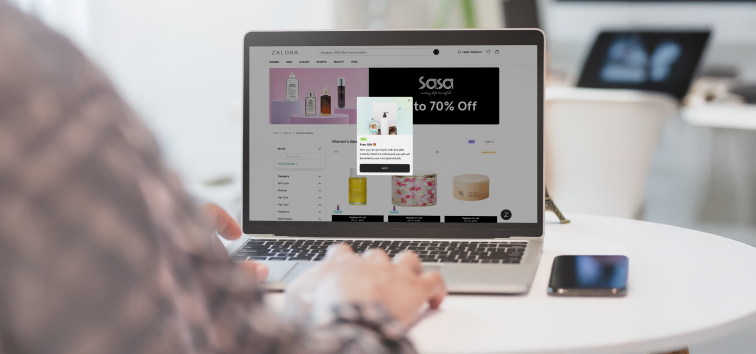
Zalora Group is an eRetailer founded by Kinnevik AB and Rocket Internet and is a part of the Global Fashion Group. Zalora has established a strong presence in several Southeast Asian countries. With a broad network of logistical services, Zalora is known for speedy and reliable deliveries, as well as offering multiple payment methods, including cash-on-delivery. Commission rates range from 10% to 30%. Zalora also has various brick-and-mortar pop-up stores.
- Regions: Singapore, Thailand, Vietnam, Indonesia, Brunei, Hong Kong, Malaysia, Philippines, Taiwan
- No. of Customers: 2.6M
- No. of Monthly Visitors: 50M+
- No. of Brands and Sellers: 3K+
- Product Category: Fashion, footwear, accessories
40. 11Street
11Street is the most visited e-commerce shopping website in South Korea. The marketplace is number one in mobile commerce with the highest monthly unique visitor among mobile shopping apps in Korea. After its inception, 11Street expanded to Malaysia. In 2019, however, 11Street.my was restructured and it became PrestoMall.
- Region: South Korea
- No. of Registered Users: 34M
- Product Category: General
- Market Share: ~13% in South Korea
Leading e-commerce Markets in APAC
Five countries account for the vast majority of APAC e-commerce volume. China dominates at 83% of regional retail e-commerce sales, followed by Japan at 4.5%. The highest online retail growth rates are found in Southeast Asia and South Asia.
China: The world’s largest e-commerce market with 50% online retail penetration. Taobao (960M MAU), JD.com (570M MAU), and Pinduoduo (720M MAU) account for the majority of domestic GMV in the country. [2]
India: Driven by Flipkart and Amazon India, which together hold over 60% of market share. Social commerce platforms like Meesho are opening distribution into tier 2 and tier 3 cities.
South Korea: The e-commerce market hit US$ 230 billion in 2024, with mobile commerce accounting for 75% of transactions. Coupang leads with 39.7% market share, followed by Naver Shopping at ~25% [8].
Japan: The second-largest APAC e-commerce market and fourth-largest globally. Rakuten Ichiba and Amazon Japan are the dominant platforms. Japanese consumers expect high service levels, precise delivery windows, and quality packaging.
Additionally, Southeast Asia is the fastest-growing subregion in Asia, with Shopee and Lazada as dominant generalist platforms and TikTok Shop as a major disruptor. Indonesia accounts for 44% of SEA e-commerce volume. Digital wallets (GoPay, DANA, OVO, ShopeePay, GCash) have displaced cash-on-delivery as the primary payment method in most markets.
Factors to choose the best Asian online marketplace for selling products
Choosing the right Asian marketplace online depends less on platform features and more on fit: where your buyers are, what selling on the platform costs, and how it handles fulfillment and settlement in each market. These are the factors that matter most.
1. Target market and audience. Match the marketplace to where your buyers actually shop. Shopee and Lazada dominate Southeast Asia, Coupang and Naver lead South Korea, Tmall and JD.com anchor China. Listing on a platform your audience doesn’t use wastes listing and ad spend.
2. Marketplace traffic and category fit. Check active buyer volume and whether the platform is strong in your category. A generalist marketplace and a fashion-led one such as Zalora reach very different shoppers.
3. Seller fees and commission structure. Compare commission rates, listing fees, and payment charges. Rates vary widely across APAC platforms (Zalora, for example, runs 10–30%), which directly affects margin.
4. Cross-border selling capability. If you sell across markets, check support for cross-border listings, local entity requirements, and duties. Tmall Global, for instance, allows selling into China without a local entity.
5. Fulfillment and logistics support. Assess each platform’s fulfillment programs, carrier network, and SLA rules. Marketplaces penalize late shipments and cancellations, so logistics capability affects both cost and listing visibility.
6. Payment methods and settlement. Confirm the platform supports dominant local payment methods (GCash in the Philippines, GoPay and DANA in Indonesia, KakaoPay in South Korea) and check settlement timelines, which affect cash flow.
7. Competition and market saturation. Gauge how crowded your category already is. High saturation raises ad costs and makes organic visibility harder.
8. Integration and scalability. Selling across multiple marketplaces and countries multiplies operational complexity. The platform, and the order and inventory systems behind it, must keep listings synced and stock accurate through campaign peaks (9.9, 11.11, 12.12) without manual reconciliation.
Consumer behavior in APAC E-commerce
Consumer behavior in APAC e-commerce differs significantly from Western markets in payment preferences, channel usage, and shopping triggers.
Mobile-first purchasing. In South Korea, 75% of e-commerce transactions happen on mobile. In the Philippines, mobile generates 78.82% of online sales. In Indonesia, 95% of internet users shop via smartphones.
Social commerce and content-driven discovery. Consumers in Southeast Asia use e-commerce marketplaces (57%) for product discovery, followed by social media (50%) and search engines (40%). In Thailand, 88% of consumers buy through social commerce channels.
Digital wallet adoption. Digital wallets have overtaken credit cards across most APAC markets. [19] In Indonesia, GoPay, DANA, OVO, and ShopeePay dominate. In the Philippines, GCash leads with 94 million users. In South Korea, KakaoPay and Naver Pay are growing rapidly. [20]
Campaign-driven purchasing spikes. Monthly double-day sales (4.4 through 12.12) generate traffic surges of 300%+ on platforms like Shopee. Enterprise operations must align inventory, warehouse capacity, and customer service around these predictable but intense spikes.
APAC E-commerce Platform Comparison Chart
An e-commerce platform comparison chart consolidates key operational data about different marketplaces in one place. By comparing factors such as regions, visitor volumes, active buyers, and product categories, businesses can evaluate which platforms align with their target markets and operational requirements.
E-commerce Platform | Region | Daily Visitors | Active Buyers | Monthly Visits | Product Category | Market Share (if applicable) |
| AliExpress | China | 20M+ | 150M | – | General | – |
| Amazon | Global | 2.8B | 300M | 5.2B | General | 37.9% in the USA (2020) |
| BliBli | Indonesia | 4.5M | 2.5M | 202M | General | – |
| Bukalapak | Indonesia | 1.2M | 900K | 38.58M | General | – |
How to enter the APAC e-commerce market successfully
Entering the APAC e-commerce market requires a structured approach. The region’s diversity makes a single-strategy approach unworkable.
1. Start with one to two priority markets. Singapore and Malaysia are common entry points for Southeast Asia due to English-language support and established logistics infrastructure. Markets like Indonesia and Japan would require deeper localization.
2. Map the marketplace mix per market. In Indonesia, you need Shopee, Tokopedia, and TikTok Shop to cover 70%+ of traffic. In South Korea, Coupang and Naver Shopping. In India, Flipkart and Amazon India.
3. Build unified order orchestration early. Brands that centralize order routing, inventory sync, and fulfillment management from the outset avoid the manual reconciliation problems that break operations at scale. Anchanto’s Order Management system provides pre-built connectors to Shopee, Lazada, TikTok Shop, and 200+ platforms.
4. Localize beyond language. Integrate the right payment methods (GrabPay in Malaysia, or KakaoPay in Korea), adapt product imagery to local preferences, and build customer service in local languages.
5. Plan for promotional calendar operations. Between Ramadan sales, Songkran, Diwali, 9.9, 11.11, 12.12, and platform campaigns, enterprise sellers must plan inventory, staffing, and advertising month-by-month. Panasonic announced e-commerce expansion across Asia-Pacific in partnership with Anchanto to manage this kind of multi-market complexity.
6. Monitor last-mile carrier performance. Delivery experience directly impacts seller ratings and search visibility. See our guide to last-mile carriers in APAC to choose the best one.
Conclusion
Choosing the right e-commerce platform sets the foundation for your online business performance across APAC. The right platform makes it easier to reach your target audience, process payments securely, and manage product operations at scale. The wrong choice can lead to operational bottlenecks, lost sales, and compliance risks.
To make the right decision, evaluate your requirements against the factors covered in this guide: cost structure, scalability, fulfillment infrastructure, integration capability, and alignment with your target markets. Take the time to research different options and assess how each platform supports your specific operating model.
And if you’re ready to integrate your e-commerce business with top APAC e-commerce marketplaces, reach out to our experts now!
FAQs
What is the APAC e-commerce market size?
The APAC e-commerce market is valued at approximately US$ 4.86 trillion in 2026. It is projected to grow at 8.98% CAGR to reach US$ 7.47 trillion by 2031. China accounts for 83% of regional retail e-commerce sales.
Which country leads e-commerce in APAC?
China leads by a wide margin at 83% of regional retail e-commerce sales. In terms of growth rate, the Philippines is projected to grow fastest at 16.7% CAGR through 2031.
What are the biggest marketplaces in Asia-Pacific?
The largest by traffic and GMV include Shopee, Lazada, Coupang, Tmall, Taobao, Amazon, Flipkart, JD.com, Rakuten, TikTok Shop, and Tokopedia.
What are the challenges of selling in APAC?
Key challenges include managing multi-marketplace operations across countries with distinct regulatory requirements, payment ecosystems, fulfillment standards, and promotional calendars. Inventory fragmentation and maintaining SLA compliance during campaign spikes (9.9, 11.11, 12.12) are common pain points.
Which payment methods are popular in APAC e-commerce?
Digital wallets dominate: GoPay, DANA, OVO, ShopeePay in Indonesia; GCash in the Philippines; KakaoPay and Naver Pay in South Korea; Touch ‘n Go and GrabPay in Malaysia. Credit cards remain primary in Japan, Australia, and South Korea. UPI has transformed payments in India.
What is a B2B e-commerce platform?
A B2B e-commerce platform is an online marketplace where businesses buy and sell goods in bulk. It is where companies shop for supplies, equipment, and products they need to run their operations.
What is an e-commerce platform?
An e-commerce platform is a digital marketplace where businesses sell their products online. It is where you set up shop, display your products, and handle sales without needing a physical store.
How to choose an e-commerce platform?
Evaluate platforms based on your budget, user-friendliness, design options, scalability, SEO capabilities, security features, and integration support. Choose one that fits your needs and helps your business grow while keeping customers satisfied.
Which platform is best for e-commerce in APAC?
The best platform depends on your target market and product category. Amazon is strong for reaching a global audience, Lazada and Shopee for Southeast Asia, Coupang for South Korea, Flipkart for India, and Tmall for China. Most businesses operating across APAC need a presence on multiple platforms simultaneously.
References
[2] Emarketer.com – 2026 – Asia-Pacific Ecommerce Forecast 2026
[3] Aws.amazon.com – How Anchanto Facilitates E-commerce Management for Enterprises across APAC
[4] Sell.amazon.com – Maximize your sales potential with the Featured Offer
[5] Forbes.com – 35 Top E-Commerce Statistics
[6] Paymentscmi.com – A Comprehensive Look at Indonesia’s E-Commerce Market
[7] Modernretail.co – What to know about Coupang, the South Korean Amazon that is about to go public
[8] Restofworld.org – South Korea’s top e-commerce platforms by market share
[9] Sec.gov – eBay 2025 Annual Report
[10] Business-standard.com – Flipkart leads e-comm mkt with 48% share, Meesho fastest growing platform
[11] Statista.com – Number of annual active customers of JD.com, Inc. from 2017 to 2021
[12] Listcorp.com – Kogan.com May 2025 Business Update
[13] Cube.asia – Singapore Poised For Growth in 2025: What’s Next for the Home of Shopee and Lazada?
[14] Techcrunch.com – Meesho GMV tops $5B; app grows faster than Flipkart, Amazon India
[15] Businessofapps.com – Temu Revenue and Usage Statistics (2026)
[17] Datareportal.com – TikTok Users, Stats, Data & Trends for 2025
[18] Techbuzzchina.substack.com – TikTok Shop Watch #5: Southeast Asia
[20] Fintechnews.sg – Southeast Asia Payment Methods in 2026: Everything You Need to Know